
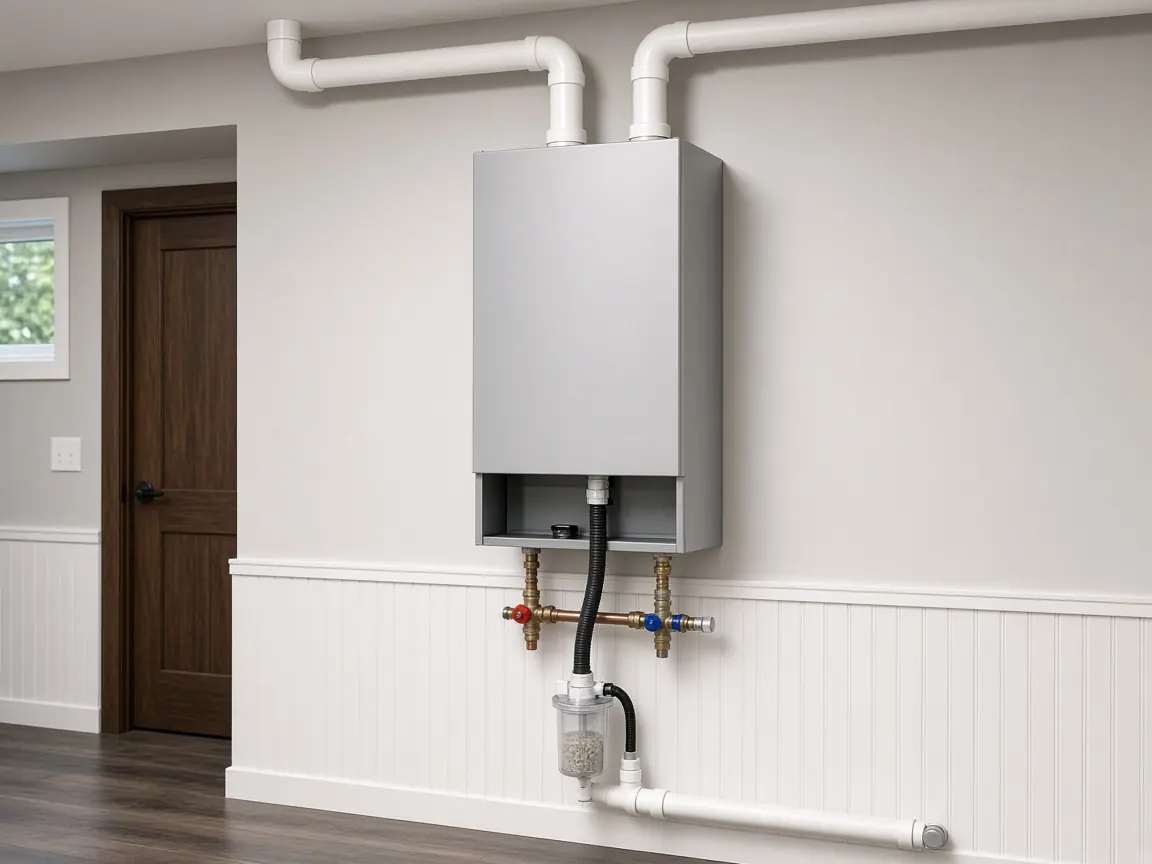
Installing a tankless water heater in a Denver home usually means upsizing the gas line, adding new venting, setting the unit up for Denver's elevation and planning freeze protection. Done right, you get continuous hot water and a freed-up corner of the basement.
Safe checks before you call from Denver
- If you smell gas, leave and call Xcel Energy or 911 from outside.
- If the heater leaks, close the cold supply valve on top.
- Turn a gas heater to pilot or off, or switch off an electric heater's breaker.
- Write down any error code and the model and age from the label.
Sizing for Colorado water
Tankless units are sized by flow rate and temperature rise. Colorado's incoming water is cold in winter, so the temperature rise is bigger, and a unit that's fine in summer can struggle in January. Size for winter demand.
Gas and venting
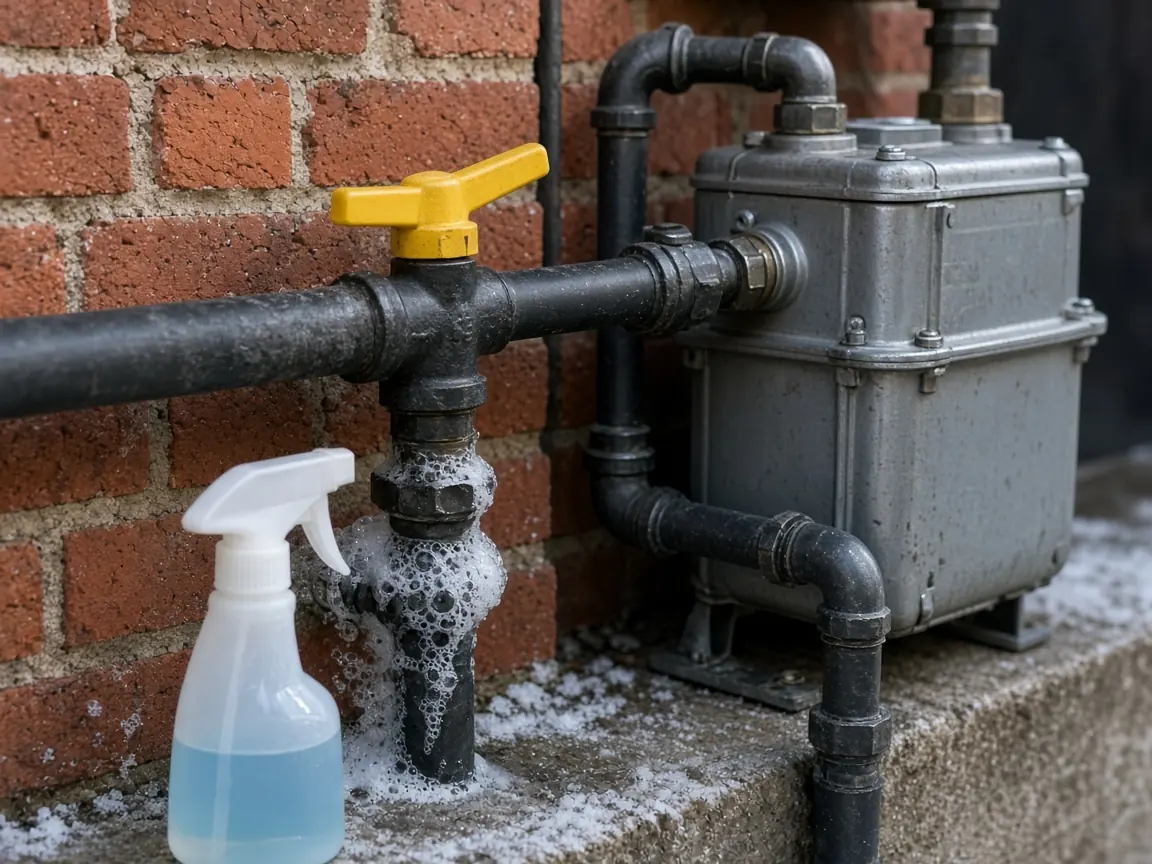
Whole-house tankless units burn far more gas at full fire than a tank, so the gas line from the meter often needs upsizing. Condensing units vent through PVC and need a condensate drain. Vent terminations must stay clear of snow and meet clearance rules.
Water still running or not sure what to do next? Call.
Call 000 000 0000High-altitude setup
Manufacturers specify settings or kits for high elevation. Altitude reduces output, so sizing should account for it.
Freeze protection
Units in garages or on exterior walls rely on electric freeze protection. Ask about a battery backup or a plan for draining during long outages.
Permits
Tankless installations involve gas, venting and electrical work and generally require a permit. In Denver, ask whether Quick Permits applies.
Where the unit goes
Tankless units can mount on a wall in a basement, utility room or garage, or outside in some cases. The location affects venting length, gas line runs and freeze protection. Many households replace a basement tank with a wall-mounted unit in the same area, keeping the water connections short.
Water heaters at Denver's altitude
Most Denver-area water heaters are gas tanks in a basement or utility room, often sharing a vent with the furnace. Electric tanks and tankless units are common too, especially in newer homes. At about a mile high, gas appliances need high-altitude setup per the manufacturer, and a burner that's set up wrong can burn poorly, soot up or produce more carbon monoxide. Incoming water is very cold in winter, so heaters work hardest just when you need them most.
Most repairs come down to a failed part: a thermocouple, flame sensor, igniter, gas valve, element, thermostat or relief valve. A tank leaking from its body needs replacing. Replacements and tankless installations generally need a permit, partly because venting and gas connections are safety-critical. Keep carbon monoxide alarms on every level, and if you ever smell gas, leave and call Xcel Energy or 911 from outside.
Who handles what in Denver
Denver Water serves Denver and handles the water main, meter and, in many cases, the curb stop. The City and County of Denver maintains the public sewer mains, while the sewer lateral from the house to the main is generally the owner's responsibility. Xcel Energy handles gas service and gas emergencies. Everything on your side of those connections, including tankless water heater installation, is work for a plumber you hire.
Good questions to ask about water heater repair in Denver
- Is this heater worth repairing at its age?
- Is it set up correctly for high altitude, and is the vent drawing properly?
- Does the work need a permit, and who arranges the inspection?
- What size and type would you suggest if it needs replacing?
Mistakes to avoid
Avoid relighting a pilot when you smell gas, capping or plugging a dripping relief valve, ignoring soot around the draft hood, and installing a replacement without a permit. Relief valves, venting and gas connections are safety parts, not places to improvise.
Part of water heater repair
Tankless Water Heater Installation is one of the water heater repair services. Others in this group: Water Heater Replacement, Tankless Water Heater Repair, No Hot Water.
Tankless Water Heater Installation in Denver neighborhoods
Calls about tankless water heater installation come from every part of Denver. Around the Denver Botanic Gardens, the gardens on York Street in Cheesman Park's neighborhood, older homes in University Park and Park Hill have basements, aging pipes and clay sewer laterals. Near Washington Park, the big south Denver park lined with bungalows and Denver Squares, the mix includes condos, converted buildings and newer infill with modern piping. See Denver Botanic Gardens. See Denver Parks and Recreation. Many plumbing jobs in Denver need a permit, and Denver Quick Permits covers many common residential projects. Verify any plumber's license with the Colorado State Plumbing Board.
Before you call: what to have handy
- Household hot water use at peak times
- Current heater and location
- Distance to the gas meter
- Where a vent could exit
- Your Denver address or nearest cross streets
How does a call about tankless water heater installation work?
- Call the number on this page and describe what's happening.
- Say what you've already shut off, if anything.
- Give your address or nearest cross streets and ask whether your address is covered. Nothing is promised in advance.
- Ask what a visit involves, how pricing works and whether a permit applies. Prices are set by the provider, not this site.
Around the metro
The same line takes tankless water heater installation calls from Aurora, Lakewood, Arvada, Westminster, Thornton, Centennial, Littleton, Englewood, Wheat Ridge, Commerce City, Broomfield, Highlands Ranch, Parker, Golden. Coverage for your exact address is confirmed on the call.