
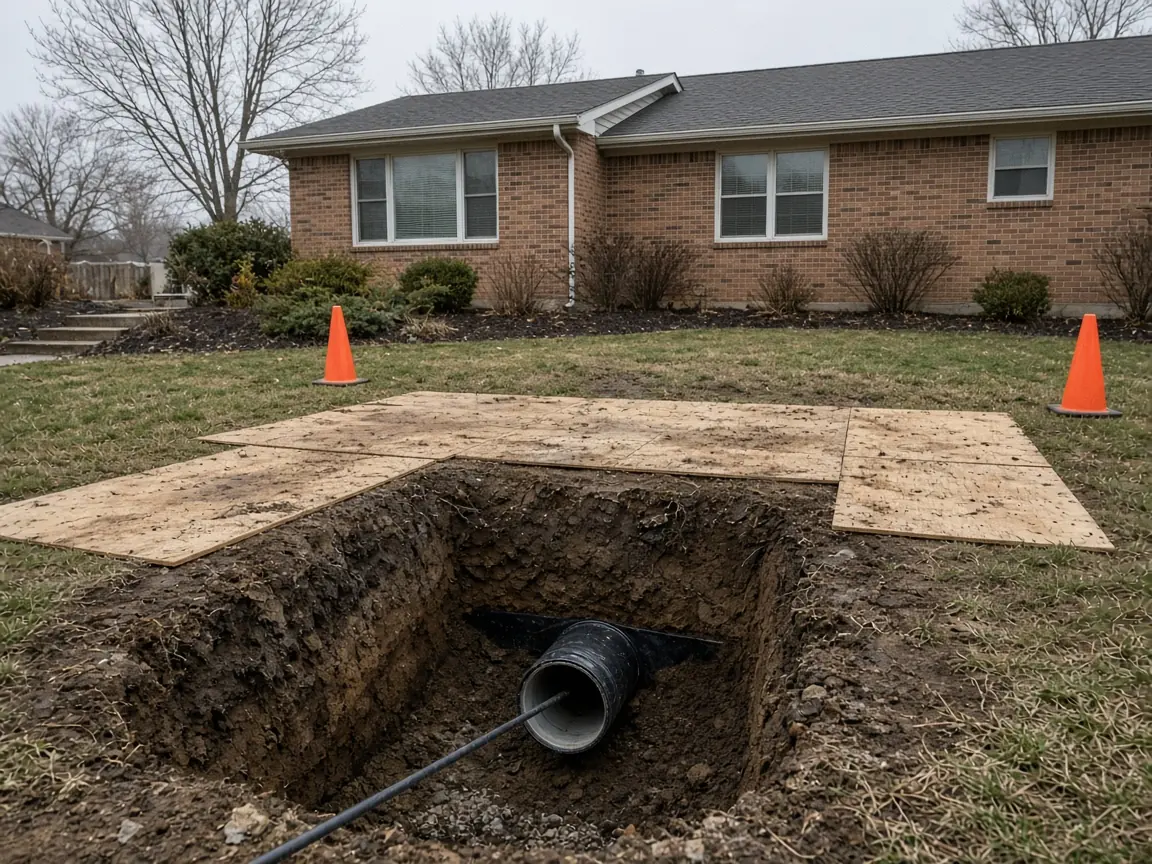
Sewer line replacement in Denver makes sense when the lateral is failing along much of its length: collapsed Orangeburg, clay pipe with roots at every joint, badly corroded cast iron, or repeated breaks. The choice is between open-trench replacement and trenchless bursting, and camera footage shows which fits.
Safe checks before you call from Denver
- Stop using water if drains are backing up.
- Keep people and pets away from any sewage.
- Note which fixtures back up and when, which helps locate the problem.
- Don't dig to find the line until Colorado 811 has marked utilities.
Signs the whole line needs replacing
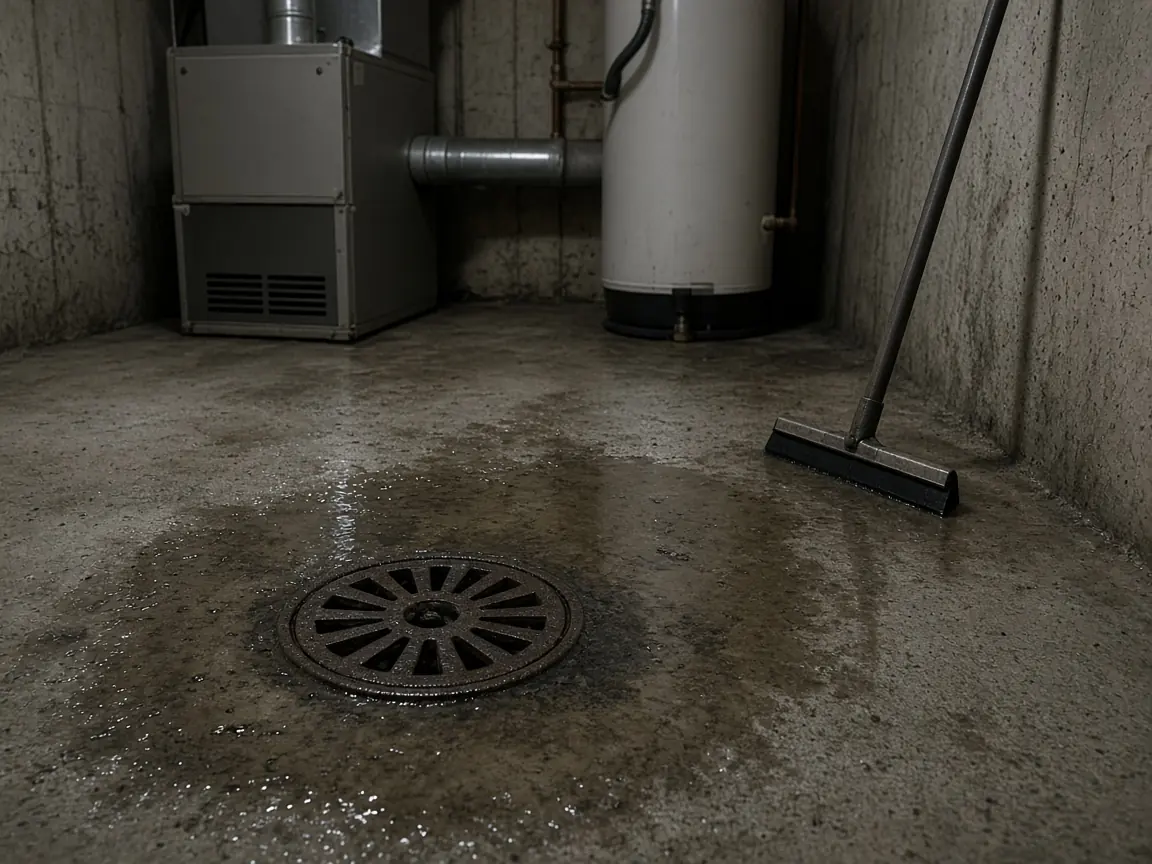
Multiple breaks or root intrusions along the line, sections that are collapsed or deformed, severe sags, repeated backups after cleaning, and pipe material like Orangeburg that's known to deteriorate. One bad spot is usually a spot repair. Many bad spots point to replacement or lining.
Open trench replacement
The line is excavated along its length, the old pipe removed and new PVC laid at the correct slope with proper bedding. It fixes sags directly and allows adding cleanouts. It disturbs more of the yard and can involve driveways, sidewalks and the street.
Water still running or not sure what to do next? Call.
Call 000 000 0000Trenchless options
Pipe bursting replaces the line with new HDPE using access pits. Lining creates a new pipe inside the old one. Neither fixes a severe sag, which may need a section dug up and regraded.
Street and sidewalk work
If the lateral runs under a public sidewalk or street to the main, work in the right-of-way usually needs additional permits, traffic control and restoration to city standards. In Denver, the owner is generally responsible for the lateral to the main.
Permits, locates and inspection
Replacements require permits and Colorado 811 locates. An inspection typically confirms slope, bedding and connections before backfill. Ask the provider to handle permits and include restoration in the quote.
Timing
Planning replacement before the line fails completely means choosing a method and schedule, rather than reacting to a backup.
Sewer laterals around Denver: what goes wrong
The sewer lateral carries everything from the house to the public main, and in Denver it's generally the owner's responsibility. Older laterals are often vitrified clay with joints every few feet, which roots can enter. Some mid-century homes have Orangeburg, a fiber pipe that deforms over time. Cast iron corrodes from the inside. Front Range swelling clay soils can shift pipes, creating sags and offset joints. Any of these leads to recurring backups, slow drains and, eventually, a broken line.
The right repair depends on what the camera shows. Roots in an otherwise sound pipe can be cleared and managed. Cracks and joint leaks in a round, properly sloped pipe may suit lining. Collapsed, badly offset or sagging pipe usually needs pipe bursting or excavation. Work in the street involves permits and coordination with the city, and any digging needs Colorado 811 locates first.
Who handles what in Denver
Denver Water serves Denver and handles the water main, meter and, in many cases, the curb stop. The City and County of Denver maintains the public sewer mains, while the sewer lateral from the house to the main is generally the owner's responsibility. Xcel Energy handles gas service and gas emergencies. Everything on your side of those connections, including sewer line replacement, is work for a plumber you hire.
Good questions to ask about sewer line repair in Denver
- Can I see the camera footage and the depth and location marks?
- Is the problem in my lateral or in the public main?
- Which repair methods fit this pipe, and why?
- Who handles permits, street work and Colorado 811 locates?
Mistakes to avoid
Avoid repeated root cutting with no inspection, digging before utilities are marked, and choosing a repair method before seeing the camera footage. Lining a pipe that sags or has collapsed rarely solves the real problem, and a repair under the street brings permits and city coordination into play.
Part of sewer line repair
Sewer Line Replacement is one of the sewer line repair services. Others in this group: Sewer Camera Inspection, Trenchless Sewer Repair, Tree Root Removal.
Sewer Line Replacement in Denver neighborhoods
From Washington Park to Stapleton/Central Park, Denver homes need sewer line replacement for different reasons. Blocks near Red Rocks Park and Amphitheatre, the Denver Mountain Park venue in the foothills near Morrison, are full of early twentieth-century houses. Streets close to Denver Union Station, the restored rail hub at the center of LoDo, lean newer, with different materials and different failure points. See Red Rocks Park and Amphitheatre. See Denver Union Station. Many plumbing jobs in Denver need a permit, and Denver Quick Permits covers many common residential projects. Verify any plumber's license with the Colorado State Plumbing Board.
Before you call: what to have handy
- Camera footage and problem locations
- Pipe material if known
- What's over the line
- Whether the line runs under the street
- Your Denver address or nearest cross streets
How does a call about sewer line replacement work?
- Call the number on this page and describe what's happening.
- Say what you've already shut off, if anything.
- Give your address or nearest cross streets and ask whether your address is covered. Nothing is promised in advance.
- Ask what a visit involves, how pricing works and whether a permit applies. Prices are set by the provider, not this site.
Around the metro
The same line takes sewer line replacement calls from Aurora, Lakewood, Arvada, Westminster, Thornton, Centennial, Littleton, Englewood, Wheat Ridge, Commerce City, Broomfield, Highlands Ranch, Parker, Golden. Coverage for your exact address is confirmed on the call.