
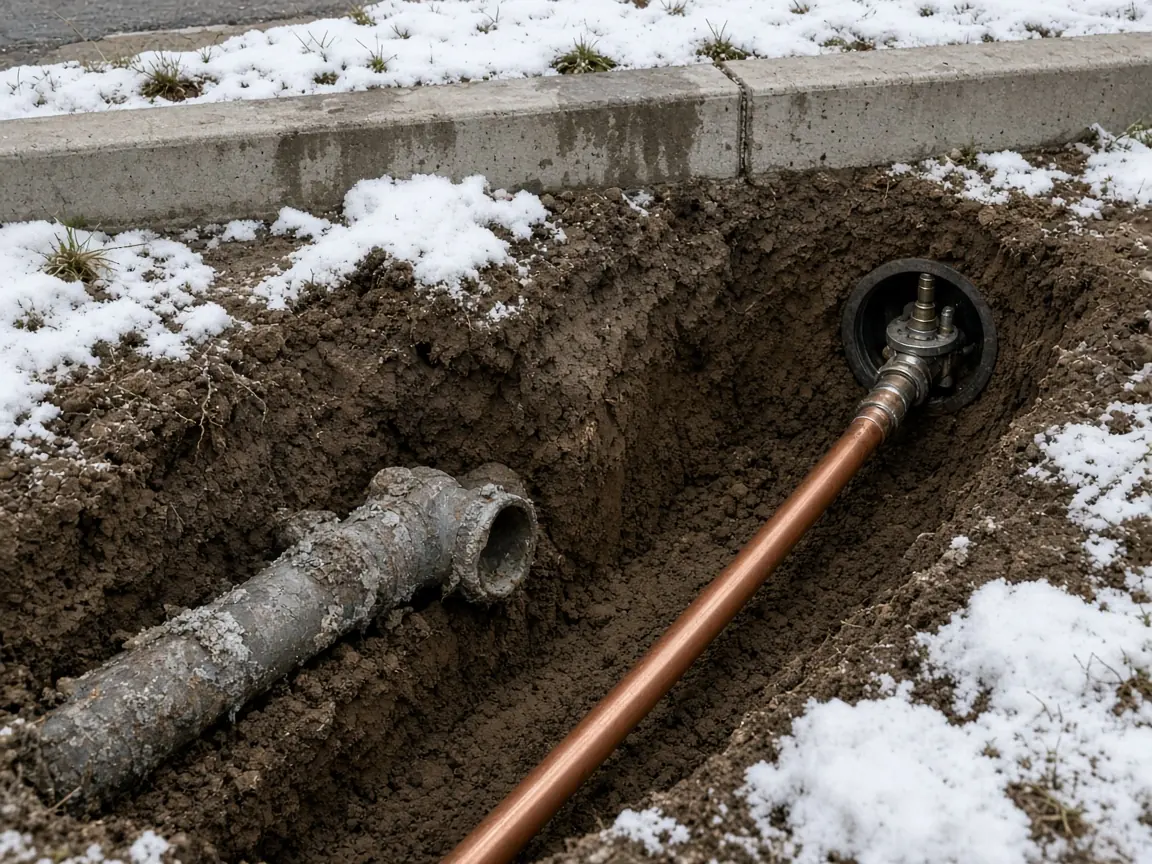
The water service line runs from the curb stop near the street to your Denver home's main shutoff, and it's generally the owner's responsibility. Leaks, low pressure, and old lead or galvanized pipe are common reasons to repair or replace it.
Safe checks before you call from Denver
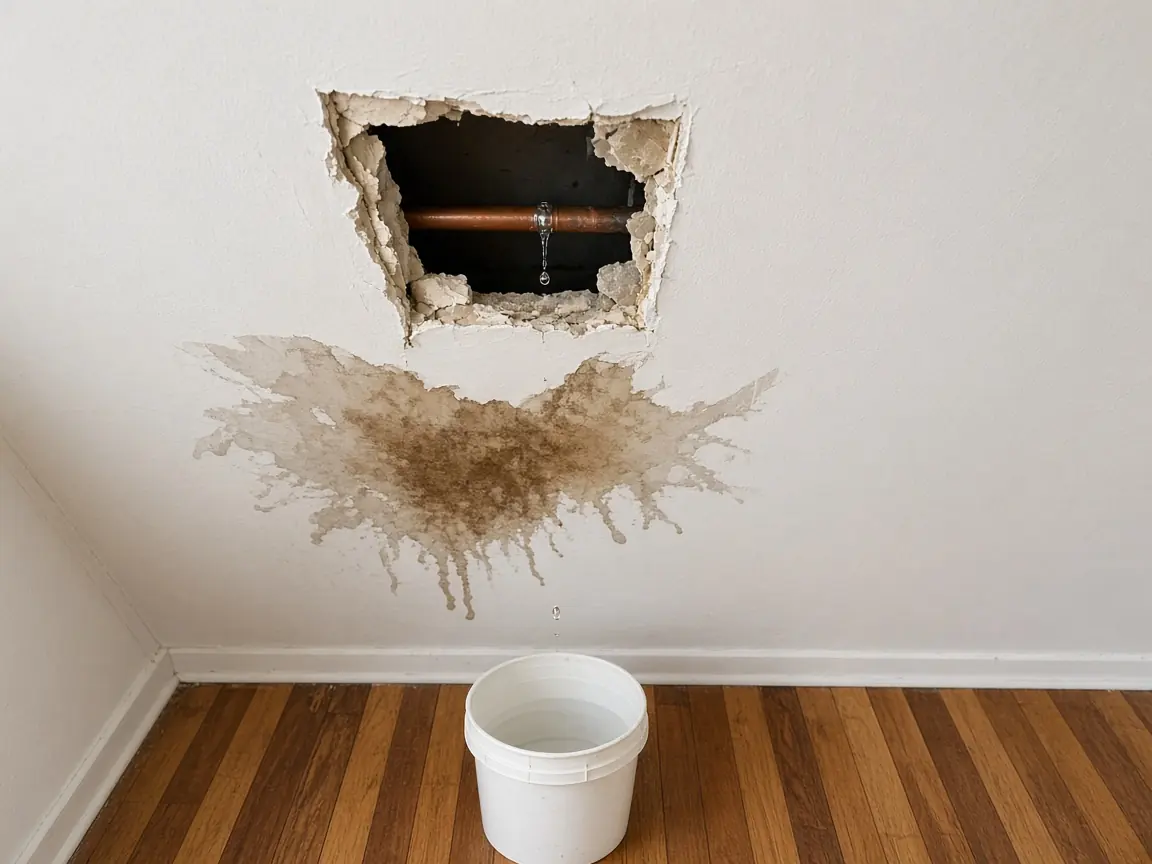
- Close the valve feeding the leak, or the main shutoff.
- Catch dripping water and move belongings.
- Do a meter test with all fixtures off.
- Photograph stains and damage for your records.
Signs of a service line problem
A meter that moves with the house shutoff closed, soggy ground between the street and house, low pressure throughout the house, and discolored water. Old lead or galvanized lines are reasons to plan replacement.
Lead service lines
Some older homes in Denver have lead service lines. Denver Water runs a Lead Reduction Program that includes replacing lead service lines. Check Denver Water's pages for whether your address is included and how the program works. Suburban utilities have their own inventories.
Water still running or not sure what to do next? Call.
Call 000 000 0000Repair methods
Leaks can be repaired by excavating the spot. Full replacement can be done by trench or by trenchless methods such as boring or pulling new pipe. Colorado 811 locates are required before digging.
Frost depth
Service lines must be buried deep enough to avoid freezing in Colorado winters. Shallow sections can freeze, and repairs need proper depth.
Permits and the utility
Service line work generally needs a permit and coordination with the water utility, especially at the curb stop and meter.
What a replacement involves
A typical service line replacement runs from the curb stop to the house, connects to the meter or main shutoff, and is pressure tested before backfill. The new line is buried below frost depth, and trenchless methods can reduce damage to lawns, driveways and landscaping.
Pipes and leaks in Denver-area homes
Denver's housing spans more than a century, and so does its pipe. Early homes often have galvanized steel supply lines that corrode from the inside, reducing pressure and eventually leaking. Mid-century homes usually have copper, which can develop pinholes. Some homes from certain decades have polybutylene. Newer homes use PEX. Some older homes still have lead service lines, which Denver Water and other utilities are working to identify and replace.
Leaks hide in walls, ceilings, slabs and yards. The water meter is the first test: with everything off, it shouldn't move. Pinpointing a leak before opening a wall or digging saves damage and cost. A single leak is usually a spot repair, but repeated leaks in old pipe point toward repiping. Service line work needs Colorado 811 locates, usually a permit and coordination with the water utility.
Who handles what in Denver
Denver Water serves Denver and handles the water main, meter and, in many cases, the curb stop. The City and County of Denver maintains the public sewer mains, while the sewer lateral from the house to the main is generally the owner's responsibility. Xcel Energy handles gas service and gas emergencies. Everything on your side of those connections, including water line repair, is work for a plumber you hire.
Good questions to ask about leak detection and pipe repair in Denver
- Where exactly is the leak, and how did you confirm it?
- Is this a spot repair, or is the pipe near the end of its life?
- What pipe material will you use for the repair?
- Does the work need a permit or utility coordination?
Mistakes to avoid
Avoid opening walls before the leak is located, relying on tape or clamps as permanent repairs, ignoring a meter that moves with everything off, and assuming a high bill is a billing error. Hidden leaks keep running, and the damage behind drywall grows quietly.
Part of leak detection and pipe repair
Water Line Repair is one of the leak detection and pipe repair services. Others in this group: Repiping, Pipe Leak Repair, Water Pressure Problems.
Water Line Repair in Denver neighborhoods
From Highland to Congress Park, Denver homes need water line repair for different reasons. Blocks near Washington Park, the big south Denver park lined with bungalows and Denver Squares, are full of early twentieth-century houses. Streets close to Coors Field, the ballpark at the edge of LoDo and RiNo, lean newer, with different materials and different failure points. See Denver Parks and Recreation. See Coors Field. Many plumbing jobs in Denver need a permit, and Denver Quick Permits covers many common residential projects. Verify any plumber's license with the Colorado State Plumbing Board.
Before you call: what to have handy
- Meter test results
- Pipe material at the entry point
- Your water provider
- Soggy spots in the yard
- Your Denver address or nearest cross streets
How does a call about water line repair work?
- Call the number on this page and describe what's happening.
- Say what you've already shut off, if anything.
- Give your address or nearest cross streets and ask whether your address is covered. Nothing is promised in advance.
- Ask what a visit involves, how pricing works and whether a permit applies. Prices are set by the provider, not this site.
Around the metro
The same line takes water line repair calls from Aurora, Lakewood, Arvada, Westminster, Thornton, Centennial, Littleton, Englewood, Wheat Ridge, Commerce City, Broomfield, Highlands Ranch, Parker, Golden. Coverage for your exact address is confirmed on the call.