
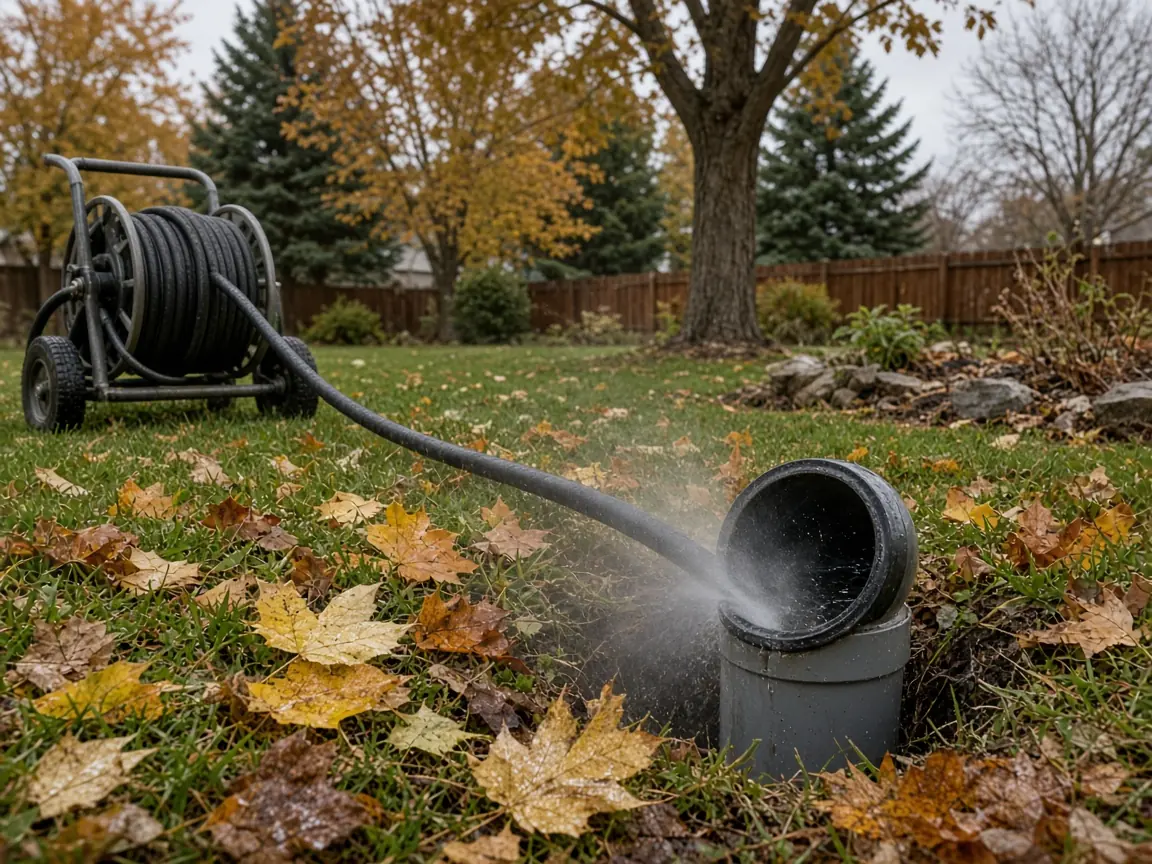
Hydro jetting cleans drain and sewer lines in Denver homes with high-pressure water, scouring grease, sludge, scale and fine roots off the pipe walls. It goes further than cabling, which punches a hole through a clog. It isn't right for every pipe, so a camera check first is wise on older lines.
Safe checks before you call from Denver
- Stop running water into the clogged fixture.
- Try a plunger on a single sink or toilet, but don't plunge if sewage is backing up elsewhere.
- Skip chemical drain cleaners, which can harm old pipes and the person who opens the line.
- If more than one fixture is backing up, stop using water in the house.
How jetting works
A hose with a special nozzle goes into the line through a cleanout. Water at high pressure shoots forward to break up blockages and backward to pull the hose along and scour the walls. Different nozzles handle grease, roots or general cleaning. Debris flushes downstream to the public sewer.
When jetting makes sense
Heavy grease in kitchen lines, repeat clogs that cabling doesn't solve, sludge and scale in older cast iron, fine roots, and preparing a line for a camera inspection or pipe lining are all good uses. Restaurants and multi-unit buildings often schedule jetting as maintenance.
Water still running or not sure what to do next? Call.
Call 000 000 0000When it doesn't
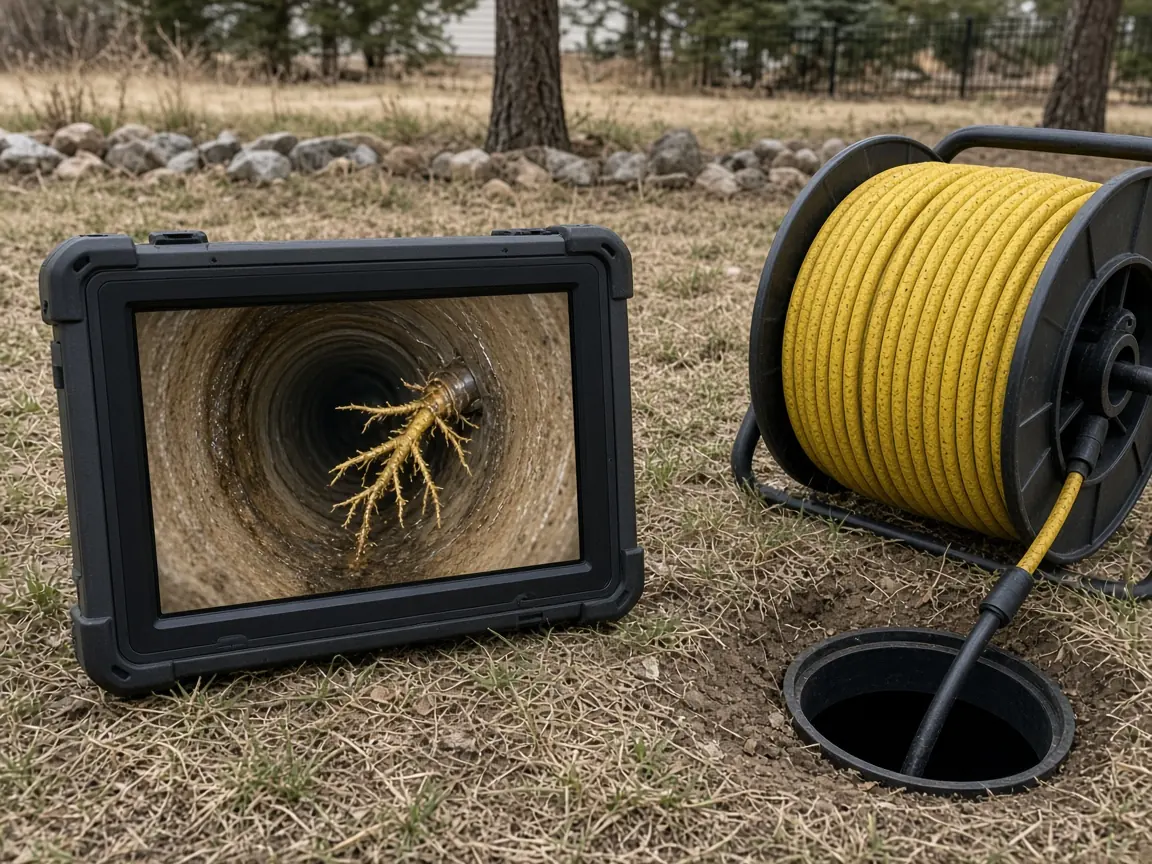
Badly broken, collapsed or offset pipe, Orangeburg pipe and severely deteriorated clay may not withstand jetting. Water could escape into the soil or make damage worse. A camera inspection first shows whether the pipe can handle it. Heavy, established roots may need cutting with a cable first.
What to expect
The provider locates access, may camera the line first, runs the jetter section by section and checks flow afterward. A follow-up camera pass shows how clean the line is and whether there's damage that caused the problem. Ask for the footage.
Jetting and maintenance
For lines with recurring grease or roots, periodic jetting can keep them flowing. But if roots return quickly, a permanent repair like lining may be the better long-term choice.
How drains clog in Denver-area homes
Drain problems come in two kinds. A single slow sink, tub or toilet usually means a clog in that fixture's trap or branch line: grease and food in kitchens, hair and soap in bathrooms, too much paper or a dropped object in toilets. Several fixtures backing up at once, especially the basement floor drain, points to the main sewer line, where roots, grease, wipes, sags and broken pipe are the usual causes. In older Denver neighborhoods with mature trees and clay laterals, roots are a frequent culprit.
Clearing a drain is only half the job when it keeps happening. A camera inspection after clearing shows whether there's a root intrusion, a belly, an offset joint or a break, and that decides whether the answer is periodic maintenance, hydro jetting, a spot repair or replacement. Chemical drain cleaners can damage older pipes and make the work more hazardous for whoever opens the line, so mention it if you've used one.
Who handles what in Denver
Denver Water serves Denver and handles the water main, meter and, in many cases, the curb stop. The City and County of Denver maintains the public sewer mains, while the sewer lateral from the house to the main is generally the owner's responsibility. Xcel Energy handles gas service and gas emergencies. Everything on your side of those connections, including hydro jetting, is work for a plumber you hire.
Good questions to ask about drain cleaning in Denver
- Was the clog in a branch line or the main line?
- Would a camera inspection after clearing tell us more?
- Is cabling enough, or is hydro jetting a better fit for this pipe?
- What can we change at home to keep it from coming back?
Mistakes to avoid
Avoid pouring chemical drain cleaners into a fixture that's completely stopped, renting a large cable machine for a main line without knowing the pipe's condition, and flushing wipes or pouring grease down the kitchen drain. Each one can turn a simple clog into a damaged pipe or a hazardous cleanup.
Part of drain cleaning
Hydro Jetting is one of the drain cleaning services. Others in this group: Clogged Kitchen Sink, Clogged or Overflowing Toilet, Main Sewer Line Clog.
Hydro Jetting in Denver neighborhoods
From Virginia Village to Washington Park, Denver homes need hydro jetting for different reasons. Blocks near Denver Union Station, the restored rail hub at the center of LoDo, are full of early twentieth-century houses. Streets close to Sloan's Lake, the lake park in west Denver ringed by older homes and new infill, lean newer, with different materials and different failure points. See Denver Union Station. Many plumbing jobs in Denver need a permit, and Denver Quick Permits covers many common residential projects. Verify any plumber's license with the Colorado State Plumbing Board.
Before you call: what to have handy
- What drain or line has the problem
- How often it clogs
- Pipe age or material if known
- Where the cleanout is
- Your Denver address or nearest cross streets
How does a call about hydro jetting work?
- Call the number on this page and describe what's happening.
- Say what you've already shut off, if anything.
- Give your address or nearest cross streets and ask whether your address is covered. Nothing is promised in advance.
- Ask what a visit involves, how pricing works and whether a permit applies. Prices are set by the provider, not this site.
Around the metro
The same line takes hydro jetting calls from Aurora, Lakewood, Arvada, Westminster, Thornton, Centennial, Littleton, Englewood, Wheat Ridge, Commerce City, Broomfield, Highlands Ranch, Parker, Golden. Coverage for your exact address is confirmed on the call.