
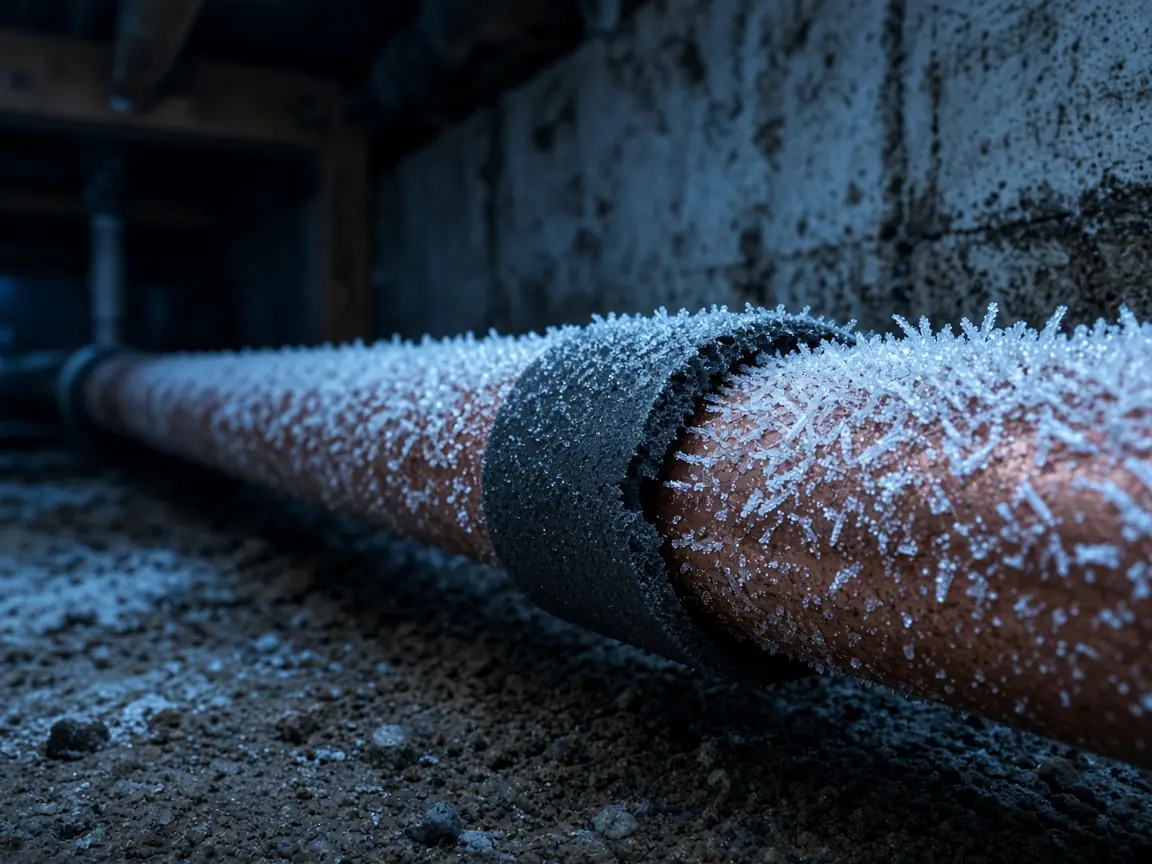
If a faucet in your Denver home gives a trickle or nothing after a cold night, a pipe has probably frozen. Thaw it gently and keep the faucet open. The real danger comes when the ice melts, because a split pipe can start leaking all at once. Know where your main shutoff is before you start.
First steps
- Keep the faucet on the frozen line open so melting water can flow.
- Warm the area with a space heater or hair dryer, never an open flame.
- Know where the main shutoff is in case the pipe has split.
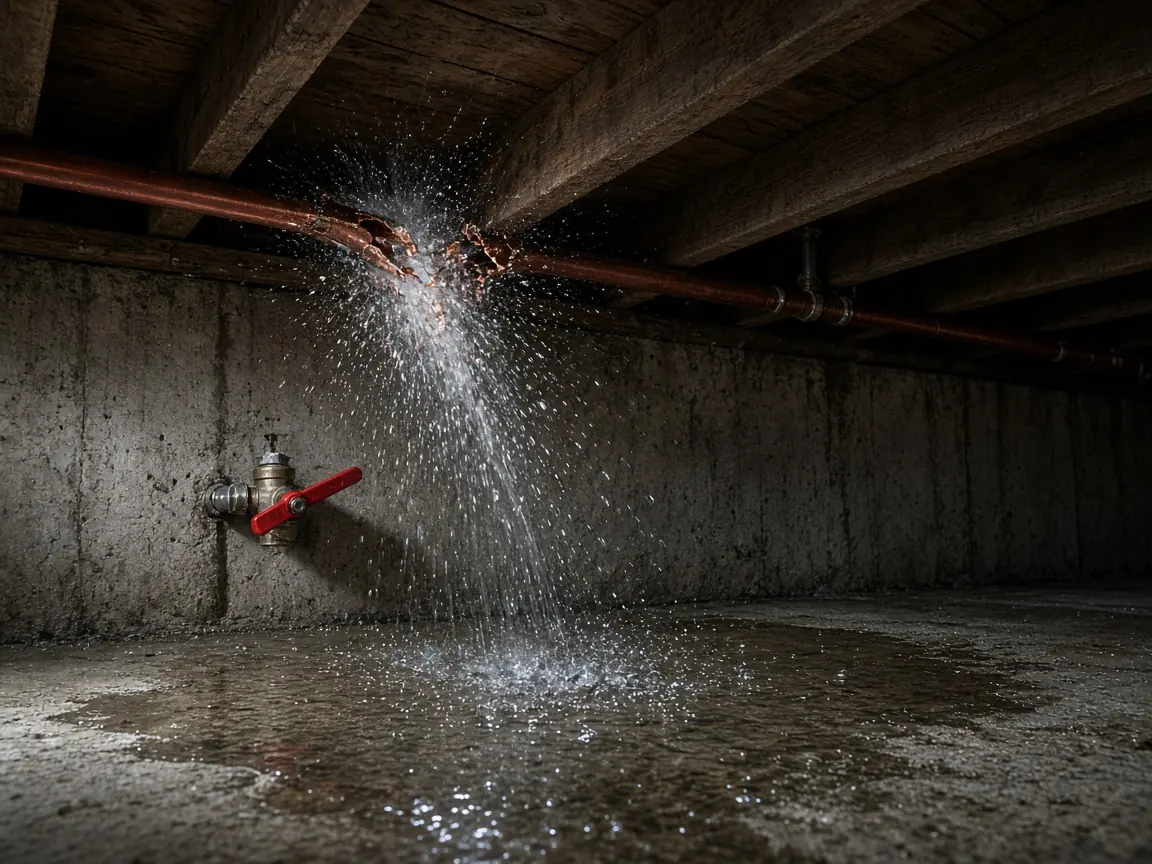
- If water starts spraying as it thaws, close the main right away.
Where pipes freeze in Denver-area homes
The usual spots are pipes in exterior walls, especially on north-facing sides, crawlspaces with open vents, garages, unheated porches and additions, under kitchen and bathroom sinks on outside walls, and hose bibs. Fire sprinkler lines and irrigation backflow preventers freeze too. Homes in the foothills, like Golden, see colder nights as cold air drains down the canyons.
How to thaw a frozen pipe safely
Open the faucet the pipe feeds, both hot and cold, so water can flow as ice melts. Apply gentle heat: a hair dryer, a space heater kept away from anything flammable, heating pads or warm towels. Start near the faucet and work back toward the frozen section. Open cabinet doors to let warm air reach pipes under sinks. Never use a torch, a propane heater or any open flame, which can start fires or damage pipes.
Water still running or not sure what to do next? Call.
Call 000 000 0000When it's frozen somewhere you can't reach
If you can't find the frozen section, it's likely inside a wall, ceiling or crawlspace. Raising the house temperature and opening cabinets can help, but it can take a long time, and a hidden split can leak inside the wall as it thaws. A provider can locate the frozen section and thaw it with professional equipment, then pressure-test the line for splits.
Repairing split pipes
Copper often splits along its length. PEX is more flexible but its fittings can crack. Galvanized pipe can split at threaded joints. The damaged section is cut out and replaced. After a hard freeze, check the whole system, since more than one spot may have cracked. A frost-free hose bib that burst usually splits inside the wall, where you won't see it until you use the hose in spring.
Keeping pipes from freezing again
Insulate pipes in crawlspaces, garages and exterior walls. Seal gaps where cold air gets in near pipes. Disconnect hoses in the fall so frost-free hose bibs can drain. Blow out and winterize irrigation systems. On very cold nights, let a faucet on an outside wall drip and open cabinet doors. Keep the heat set no lower than the mid-50s when you travel. Heat tape can help on problem pipes if installed according to the manufacturer's instructions.
Why emergencies hit Denver homes the way they do
Most Denver-area houses have basements or crawlspaces, and that's where emergencies tend to show up first: a split pipe along a rim joist, sewage at the floor drain, water around the base of the water heater. Front Range winters bring sudden arctic cold after mild weeks, so freeze damage clusters in a few days each winter, often showing up as pipes thaw. Older homes add galvanized supply pipe, cast iron drains and clay sewer laterals, all of which fail with age. The common thread is that the first few minutes matter: knowing where the main shutoff is, keeping away from water near electrical equipment and leaving the house at once if you smell gas.
Once the immediate danger is handled, the repair itself is usually ordinary plumbing work: replacing a split section, clearing and inspecting a sewer line, or repairing gas piping after the utility has made things safe. Many of those repairs need a permit and inspection, and some, like sewer lateral repairs under a street, involve the city as well. Asking about permits on the first call avoids surprises later.
Who handles what in Denver
Denver Water serves Denver and handles the water main, meter and, in many cases, the curb stop. The City and County of Denver maintains the public sewer mains, while the sewer lateral from the house to the main is generally the owner's responsibility. Xcel Energy handles gas service and gas emergencies. Everything on your side of those connections, including frozen pipe repair, is work for a plumber you hire.
Good questions to ask about emergency plumbing in Denver
- Is the water, gas or sewage situation safe to wait on, and what should I keep shut off?
- What caused the failure, and are other pipes or fittings at risk?
- Will the repair need a permit or a utility to be involved?
- How is the work priced, and what happens if more damage turns up?
Mistakes to avoid
Common mistakes make emergencies worse: forcing a seized main valve until it breaks, walking into water near outlets, using a torch to thaw a frozen pipe, running more water during a sewer backup, or going back inside to look for a gas leak. Shut off what you safely can, stay clear of hazards and call.
Part of emergency plumbing
Frozen Pipe Repair is one of the emergency plumbing services. Others in this group: Burst Pipe Repair, Sewer Backup, Gas Line Repair.
Frozen Pipe Repair in Denver neighborhoods
Calls about frozen pipe repair come from every part of Denver. Around Denver Union Station, the restored rail hub at the center of LoDo, older homes in Park Hill and Berkeley have basements, aging pipes and clay sewer laterals. Near Sloan's Lake, the lake park in west Denver ringed by older homes and new infill, the mix includes condos, converted buildings and newer infill with modern piping. See Denver Union Station. Many plumbing jobs in Denver need a permit, and Denver Quick Permits covers many common residential projects. Verify any plumber's license with the Colorado State Plumbing Board.
Before you call: what to have handy
- Which faucets have no water
- Where the pipes likely run: exterior wall, crawlspace, garage
- Whether you see any leaks or bulges
- Whether the main shutoff is accessible
- Your Denver address or nearest cross streets
How does a call about frozen pipe repair work?
- Call the number on this page and describe what's happening.
- Say what you've already shut off, if anything.
- Give your address or nearest cross streets and ask whether your address is covered. Nothing is promised in advance.
- Ask what a visit involves, how pricing works and whether a permit applies. Prices are set by the provider, not this site.
Around the metro
The same line takes frozen pipe repair calls from Aurora, Lakewood, Arvada, Westminster, Thornton, Centennial, Littleton, Englewood, Wheat Ridge, Commerce City, Broomfield, Highlands Ranch, Parker, Golden. Coverage for your exact address is confirmed on the call.