
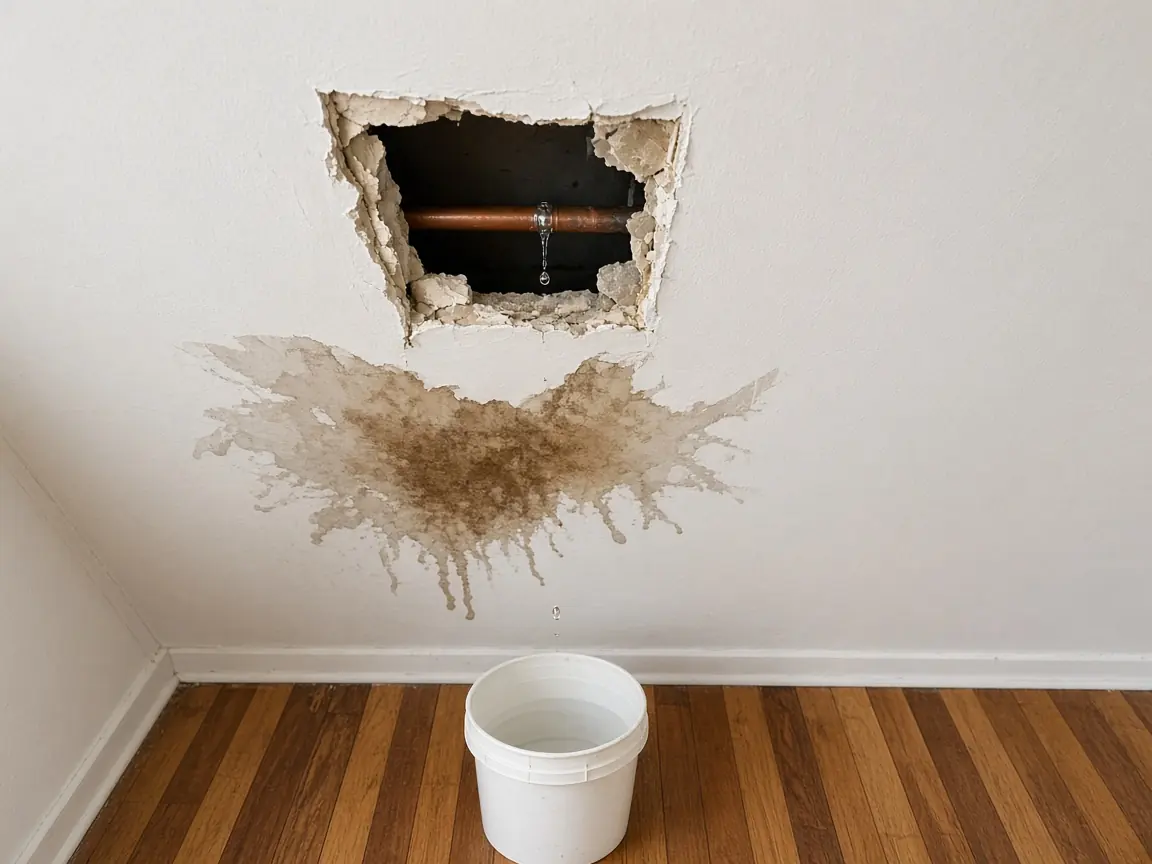
Leak detection in Denver starts with the water meter: shut everything off and see whether it still moves. If it does, there's a leak somewhere between the meter and the fixtures. Finding it precisely means less drywall opened and less yard dug up.
Safe checks before you call from Denver
- Close the valve feeding the leak, or the main shutoff.
- Catch dripping water and move belongings.
- Do a meter test with all fixtures off.
- Photograph stains and damage for your records.
Signs of a hidden leak
A higher water bill without a change in use, a meter that moves with everything off, damp spots, stains on ceilings, warped flooring, musty smells and the sound of running water.
The meter test
Turn off every fixture and appliance. Look at the meter's leak indicator or note the reading, wait 15 to 30 minutes and check again. Movement means a leak. Closing the main shutoff and retesting tells you whether the leak is in the service line outside or inside the house.
Water still running or not sure what to do next? Call.
Call 000 000 0000How providers find leaks
Acoustic listening, thermal imaging, moisture meters, pressure testing sections and tracer gas help pinpoint leaks before opening walls or digging.
Pipe materials in Denver homes
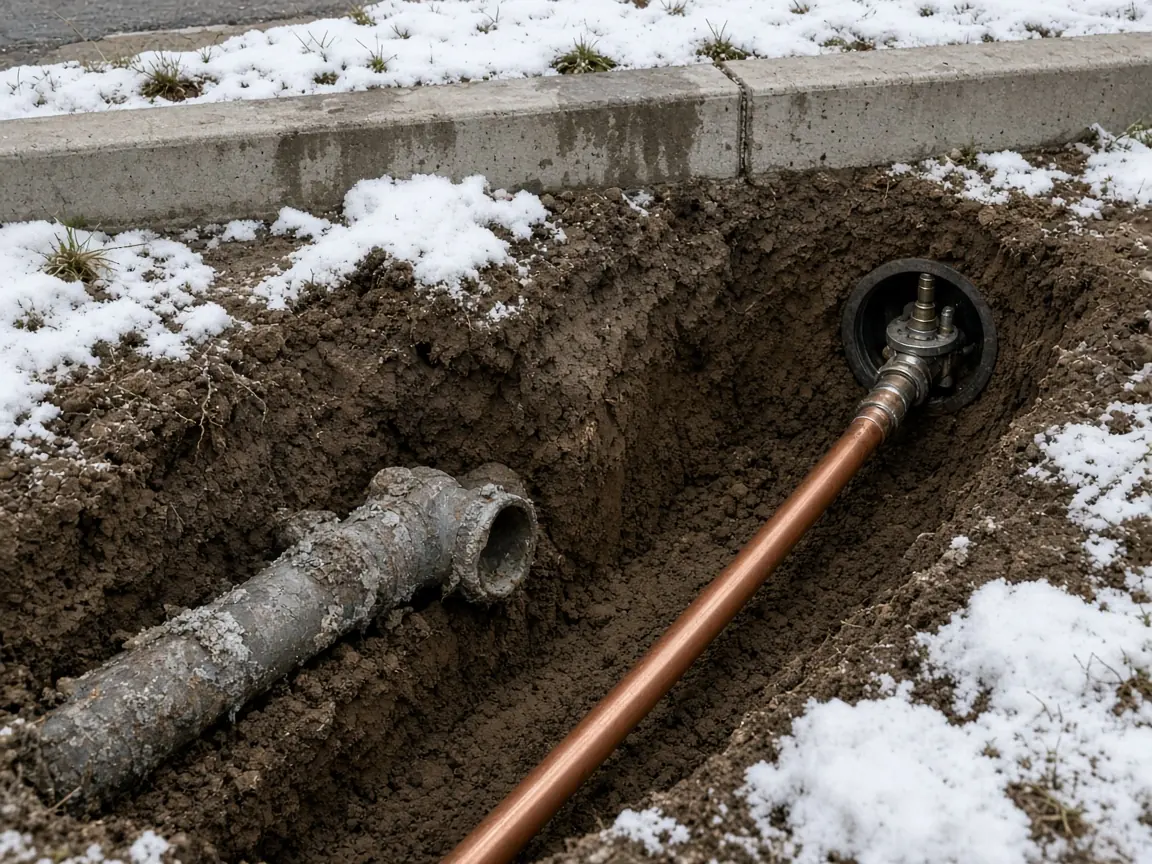
Older homes often have galvanized steel that corrodes, mid-century homes copper, and newer homes PEX. Some homes have polybutylene from certain decades, which is often recommended for replacement. Lead service lines exist in some older Denver homes.
Repair or repipe
One leak is usually a spot repair. Repeated leaks in old galvanized or failing pipe point to repiping.
Slab and yard leaks
Leaks under a slab or in the yard need different methods than leaks in walls. A warm spot on a floor, a constantly wet patch of lawn or the sound of running water with fixtures off are common signs. Pinpointing these first keeps excavation to a minimum.
Pipes and leaks in Denver-area homes
Denver's housing spans more than a century, and so does its pipe. Early homes often have galvanized steel supply lines that corrode from the inside, reducing pressure and eventually leaking. Mid-century homes usually have copper, which can develop pinholes. Some homes from certain decades have polybutylene. Newer homes use PEX. Some older homes still have lead service lines, which Denver Water and other utilities are working to identify and replace.
Leaks hide in walls, ceilings, slabs and yards. The water meter is the first test: with everything off, it shouldn't move. Pinpointing a leak before opening a wall or digging saves damage and cost. A single leak is usually a spot repair, but repeated leaks in old pipe point toward repiping. Service line work needs Colorado 811 locates, usually a permit and coordination with the water utility.
Who handles what in Denver
Denver Water serves Denver and handles the water main, meter and, in many cases, the curb stop. The City and County of Denver maintains the public sewer mains, while the sewer lateral from the house to the main is generally the owner's responsibility. Xcel Energy handles gas service and gas emergencies. Everything on your side of those connections, including leak detection and pipe repair, is work for a plumber you hire.
Good questions to ask about leak detection and pipe repair in Denver
- Where exactly is the leak, and how did you confirm it?
- Is this a spot repair, or is the pipe near the end of its life?
- What pipe material will you use for the repair?
- Does the work need a permit or utility coordination?
Mistakes to avoid
Avoid opening walls before the leak is located, relying on tape or clamps as permanent repairs, ignoring a meter that moves with everything off, and assuming a high bill is a billing error. Hidden leaks keep running, and the damage behind drywall grows quietly.
Leak Detection and Pipe Repair sub-services
- [Water Line Repair](/services/leak-detection-and-pipe-repair/water-line-repair/): Service line leaks, lead lines and replacements.
- [Repiping](/services/leak-detection-and-pipe-repair/repiping/): Replacing galvanized, polybutylene or failing pipe.
- [Pipe Leak Repair](/services/leak-detection-and-pipe-repair/pipe-leak-repair/): Pinhole leaks, dripping joints and wet ceilings.
- [Water Pressure Problems](/services/leak-detection-and-pipe-repair/water-pressure-problems/): Low pressure, high pressure and failing PRVs.
Leak Detection and Pipe Repair in Denver neighborhoods
Calls about leak detection and pipe repair come from every part of Denver. Around Red Rocks Park and Amphitheatre, the Denver Mountain Park venue in the foothills near Morrison, older homes in Capitol Hill and Baker have basements, aging pipes and clay sewer laterals. Near Denver Union Station, the restored rail hub at the center of LoDo, the mix includes condos, converted buildings and newer infill with modern piping. See Red Rocks Park and Amphitheatre. See Denver Union Station. Many plumbing jobs in Denver need a permit, and Denver Quick Permits covers many common residential projects. Verify any plumber's license with the Colorado State Plumbing Board.
Before you call: what to have handy
- Meter test results
- Where you see damp or stains
- Pipe material if known
- Recent water bills
- Your Denver address or nearest cross streets
How does a call about leak detection and pipe repair work?
- Call the number on this page and describe what's happening.
- Say what you've already shut off, if anything.
- Give your address or nearest cross streets and ask whether your address is covered. Nothing is promised in advance.
- Ask what a visit involves, how pricing works and whether a permit applies. Prices are set by the provider, not this site.
Around the metro
The same line takes leak detection and pipe repair calls from Aurora, Lakewood, Arvada, Westminster, Thornton, Centennial, Littleton, Englewood, Wheat Ridge, Commerce City, Broomfield, Highlands Ranch, Parker, Golden. Coverage for your exact address is confirmed on the call.