
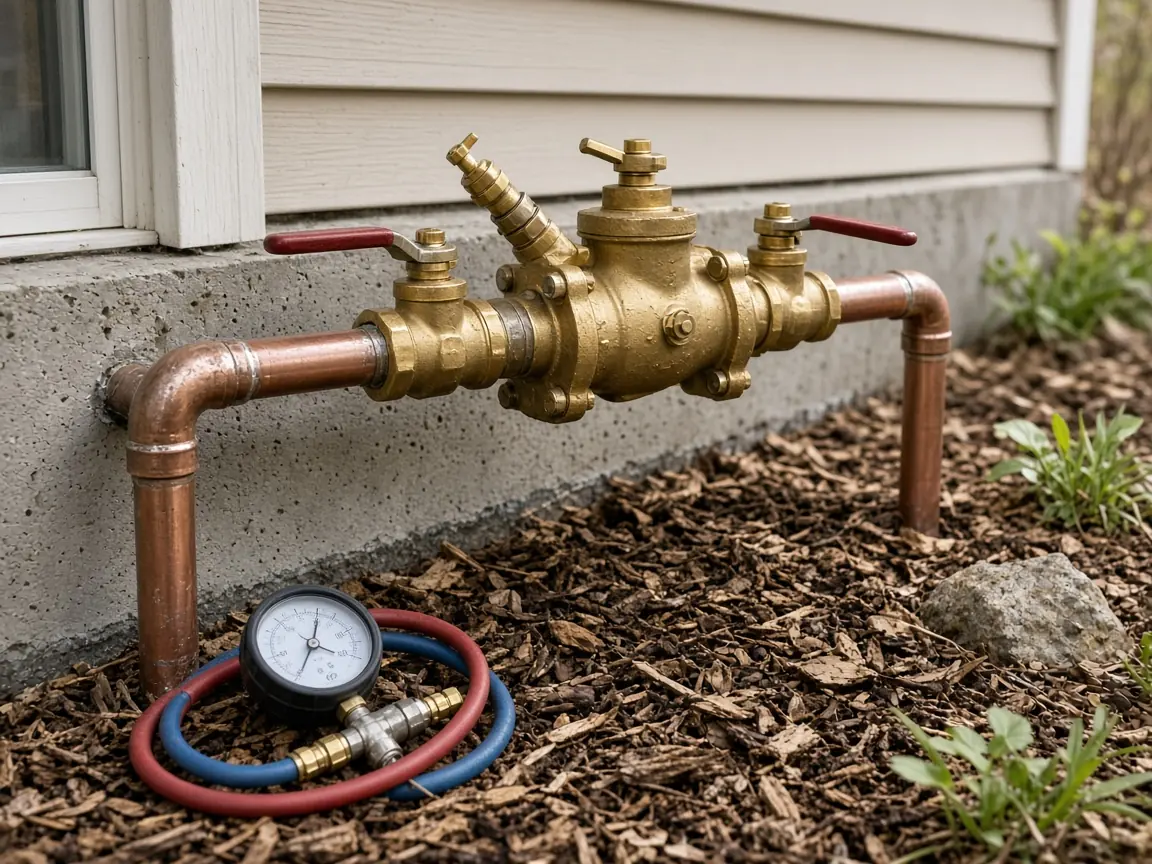
A backflow preventer keeps sprinkler water, fertilizer and lawn chemicals from flowing back into the drinking water supply in Denver. Many Colorado utilities require testing by a certified tester, and freeze damage is common when systems aren't winterized.
Safe checks before you call from Denver
- Close the fixture's shutoff valve if it's leaking.
- Turn off power to a disposal or sump pump before touching it.
- Note the brand and model if you can see it.
- If water reaches outlets or the panel, stay clear and call.
Testing
A certified tester checks the assembly with a test kit and submits results as required. Denver Water's backflow prevention program explains requirements in its service area. Suburban utilities have their own programs.
Freeze damage
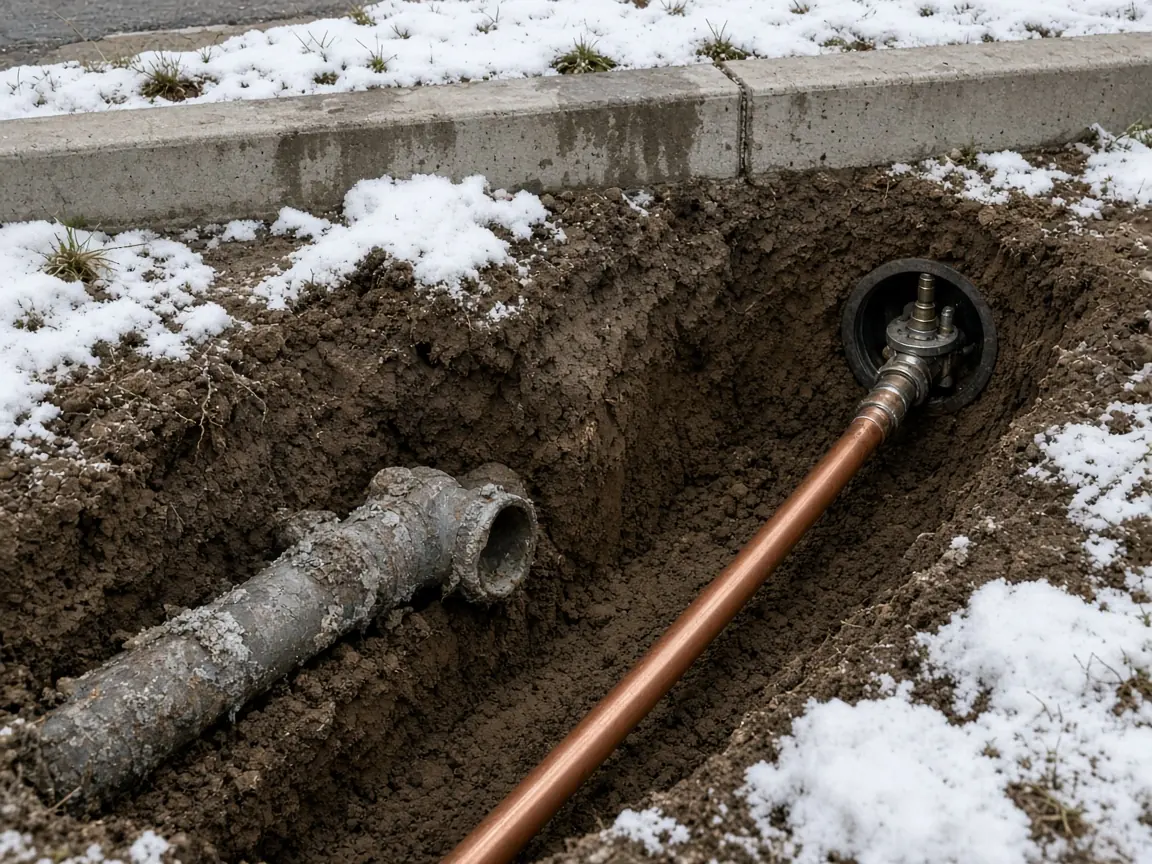
Backflow preventers sit above ground and crack when water freezes inside. Winterize sprinkler systems in fall, and don't turn them on until the danger of hard freezes has passed.
Water still running or not sure what to do next? Call.
Call 000 000 0000Repairs
Failed tests usually mean worn check valves, seals or relief valves. Cracked bodies require replacement.
Turning systems on in spring
Open valves slowly and check for leaks.
Reporting
Ask whether the tester submits results to your utility.
Types of backflow assemblies
Residential sprinkler systems commonly use a pressure vacuum breaker or a reduced pressure assembly, and some use a double check assembly. Each has test cocks and shutoff valves for testing. The type and size, printed on the body, tell the tester what kit and procedure to use and which repair parts fit. Note the type and size before you call.
Spring startup without damage
Most backflow damage happens in fall and early spring. Before turning the system on, check the assembly for cracks and make sure the test cocks and drain valves are closed. Open the main valve slowly to avoid water hammer, then check the assembly and the first zone for leaks. If the assembly sprays from the body or the bonnet, close the supply and call about repair or replacement. Many utilities expect the annual test after startup, so plan both together.
Everyday repairs that keep Denver homes running
Not every plumbing problem is an emergency, but small ones add up. A running toilet or dripping faucet wastes water and money every day. A disposal that jams or leaks makes a mess under the sink. A sump pump that fails during spring snowmelt or a summer storm lets water into the basement. A sprinkler backflow preventer that wasn't winterized cracks with the first hard freeze. Stiff, seized shutoff valves mean you can't stop the water when something does go wrong.
Most of these are straightforward repairs, and many are worth doing before they become urgent. Fixture repairs rarely need permits, while larger changes may. Many Colorado water utilities require annual testing of sprinkler backflow preventers by a certified tester. Testing a sump pump before the wet season, replacing old supply lines and exercising shutoff valves are simple steps that prevent bigger problems.
Who handles what in Denver
Denver Water serves Denver and handles the water main, meter and, in many cases, the curb stop. The City and County of Denver maintains the public sewer mains, while the sewer lateral from the house to the main is generally the owner's responsibility. Xcel Energy handles gas service and gas emergencies. Everything on your side of those connections, including backflow testing and repair, is work for a plumber you hire.
Good questions to ask about general plumbing repair in Denver
- Is this a repair or would replacement make more sense?
- Are parts for this fixture still available?
- Are there other worn valves or supply lines worth replacing during the visit?
- Does any of this need a permit?
Mistakes to avoid
Avoid overtightening plastic fittings, reaching into a disposal, running a sump pump discharge into the sewer, and turning sprinklers on before the danger of hard freezes has passed. Small mistakes on small repairs are a common source of leaks.
Part of general plumbing repair
Backflow Testing and Repair is one of the general plumbing repair services. Others in this group: Toilet Repair, Faucet and Sink Repair, Garbage Disposal Repair, Sump Pump Repair.
Backflow Testing and Repair in Denver neighborhoods
Calls about backflow testing and repair come from every part of Denver. Around Denver Union Station, the restored rail hub at the center of LoDo, older homes in Capitol Hill and Baker have basements, aging pipes and clay sewer laterals. Near Sloan's Lake, the lake park in west Denver ringed by older homes and new infill, the mix includes condos, converted buildings and newer infill with modern piping. See Denver Union Station. Many plumbing jobs in Denver need a permit, and Denver Quick Permits covers many common residential projects. Verify any plumber's license with the Colorado State Plumbing Board.
Before you call: what to have handy
- Assembly type and size
- Your water provider
- Whether it's cracked or leaking
- Utility test notice
- Your Denver address or nearest cross streets
How does a call about backflow testing and repair work?
- Call the number on this page and describe what's happening.
- Say what you've already shut off, if anything.
- Give your address or nearest cross streets and ask whether your address is covered. Nothing is promised in advance.
- Ask what a visit involves, how pricing works and whether a permit applies. Prices are set by the provider, not this site.
Around the metro
The same line takes backflow testing and repair calls from Aurora, Lakewood, Arvada, Westminster, Thornton, Centennial, Littleton, Englewood, Wheat Ridge, Commerce City, Broomfield, Highlands Ranch, Parker, Golden. Coverage for your exact address is confirmed on the call.