
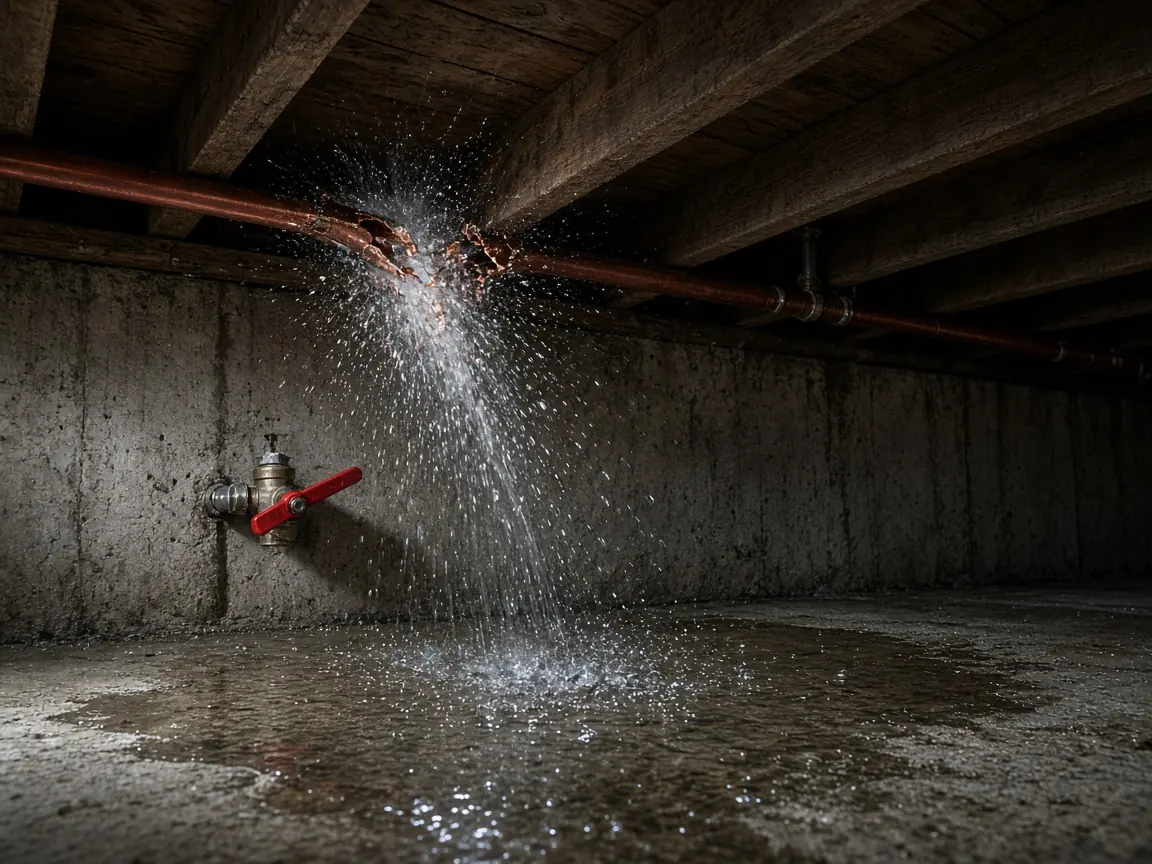
A plumbing emergency in Denver is any problem that's actively damaging the house or putting people at risk: water you can't stop, sewage coming up a drain, a split pipe after a cold snap, or a gas smell. The first few minutes are about protecting people and the house. The call comes right after.
First steps
- Water spraying or pouring: close the main water shutoff, usually where the line enters the basement or crawlspace.
- Water near outlets or appliances: stay out of the water and switch off power at the panel only if you can reach it dry.
- Sewage coming up a floor drain: stop running all water in the house.
- Gas smell: leave now and call Xcel Energy or 911 from outside. Don't switch anything on or off.
What counts as a plumbing emergency?
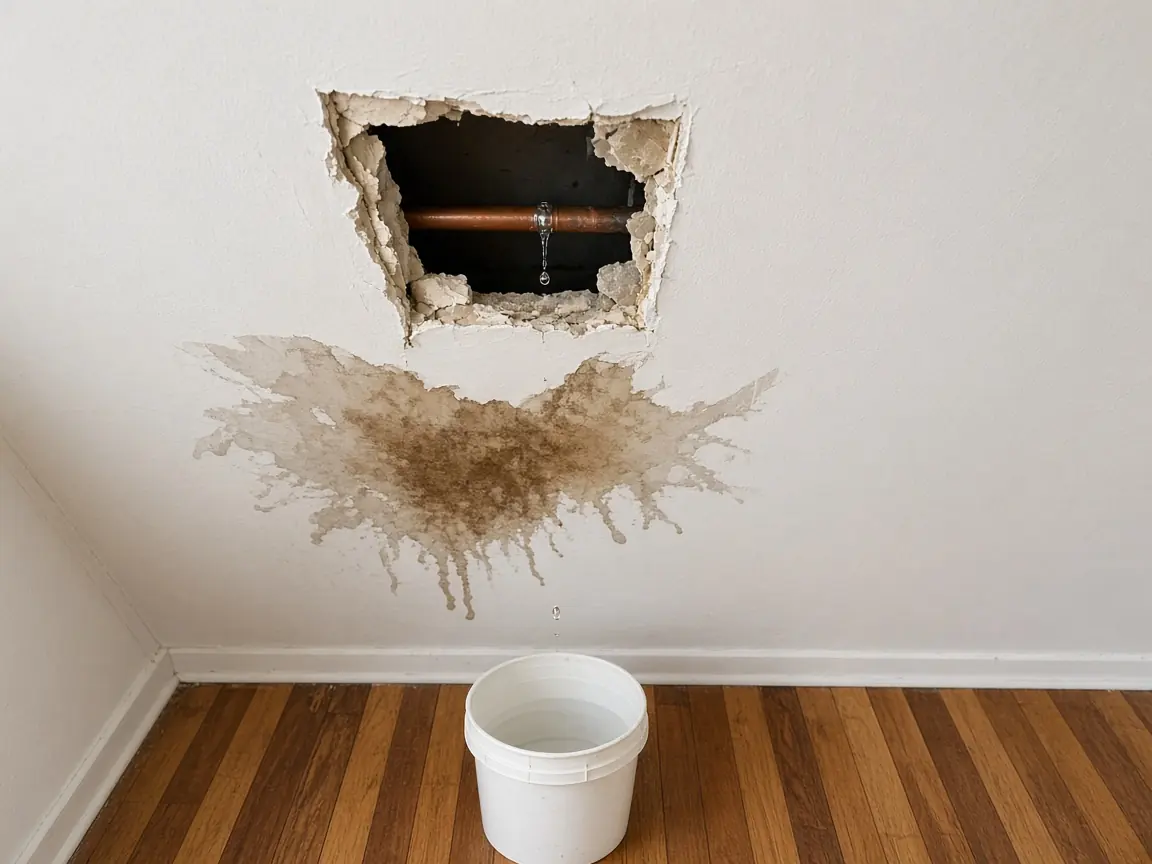
Use damage and safety as the test. A pipe spraying in a wall, a ceiling that's sagging with water, a basement floor drain pushing up sewage, a water heater pouring water and a frozen pipe that has split are emergencies, because waiting makes them worse by the minute. A dripping faucet, a slow sink or a running toilet are not. They're worth fixing soon, but they won't flood the basement overnight. A gas smell is always an emergency, but it's one for the gas utility first, not a plumber.
Know your main shutoff before you need it
Most Denver-area houses have the main water shutoff where the service line comes through the foundation: in the basement, a crawlspace or a utility room near the water meter or water heater. Older homes may have a gate valve with a round handle. Newer ones usually have a lever ball valve. Find it, make sure it turns, and show everyone in the house where it is. Our guide to finding the main water shutoff walks through where to look.
Water still running or not sure what to do next? Call.
Call 000 000 0000Winter is the busy season for a reason
Front Range cold snaps can drop temperatures well below freezing for days, often after mild weather that leaves outdoor hoses connected and crawlspace vents open. Pipes in exterior walls, crawlspaces, garages and unheated porches freeze, and the ice splits copper or PEX fittings. The leak often doesn't show until the pipe thaws. That's why many burst pipe calls come the morning after a cold night, when the sun warms the wall.
Basements change the stakes
Many homes in Denver and its suburbs have full basements, often finished. That's where the water heater, the main shutoff, the floor drain and the sump pit usually are, and it's where water collects. A sewer backup, a failed sump pump or a water heater leak can soak carpet and drywall quickly. Keeping storage off the floor near the water heater and floor drain limits the damage when something goes wrong.
What happens on an emergency call
When you call, you'll be asked what's happening, what you've already shut off and where you are. The provider will tell you whether your address is covered and what the next step is. We don't promise arrival times, because availability depends on the provider and conditions. Once on site, the first job is to stop the damage. Permanent repairs, permits and insurance paperwork come after the situation is stable.
Insurance and cleanup
Take photos and video before cleanup if it's safe. Many homeowners policies treat sudden water damage differently from gradual leaks or sewer backups, which often need a separate endorsement. Call your insurer early. Water that has soaked drywall, carpet pad or insulation usually needs professional drying to prevent mold. Sewage cleanup needs extra care because of bacteria. We don't give insurance advice and can't say what your policy covers.
Why emergencies hit Denver homes the way they do
Most Denver-area houses have basements or crawlspaces, and that's where emergencies tend to show up first: a split pipe along a rim joist, sewage at the floor drain, water around the base of the water heater. Front Range winters bring sudden arctic cold after mild weeks, so freeze damage clusters in a few days each winter, often showing up as pipes thaw. Older homes add galvanized supply pipe, cast iron drains and clay sewer laterals, all of which fail with age. The common thread is that the first few minutes matter: knowing where the main shutoff is, keeping away from water near electrical equipment and leaving the house at once if you smell gas.
Once the immediate danger is handled, the repair itself is usually ordinary plumbing work: replacing a split section, clearing and inspecting a sewer line, or repairing gas piping after the utility has made things safe. Many of those repairs need a permit and inspection, and some, like sewer lateral repairs under a street, involve the city as well. Asking about permits on the first call avoids surprises later.
Who handles what in Denver
Denver Water serves Denver and handles the water main, meter and, in many cases, the curb stop. The City and County of Denver maintains the public sewer mains, while the sewer lateral from the house to the main is generally the owner's responsibility. Xcel Energy handles gas service and gas emergencies. Everything on your side of those connections, including emergency plumbing, is work for a plumber you hire.
Good questions to ask about emergency plumbing in Denver
- Is the water, gas or sewage situation safe to wait on, and what should I keep shut off?
- What caused the failure, and are other pipes or fittings at risk?
- Will the repair need a permit or a utility to be involved?
- How is the work priced, and what happens if more damage turns up?
Mistakes to avoid
Common mistakes make emergencies worse: forcing a seized main valve until it breaks, walking into water near outlets, using a torch to thaw a frozen pipe, running more water during a sewer backup, or going back inside to look for a gas leak. Shut off what you safely can, stay clear of hazards and call.
Emergency Plumbing sub-services
- [Burst Pipe Repair](/services/emergency-plumbing/burst-pipe-repair/): Shut off, find the break, repair the pipe and dry out.
- [Frozen Pipe Repair](/services/emergency-plumbing/frozen-pipe-repair/): Safe thawing, split-pipe repair and freeze-proofing.
- [Sewer Backup](/services/emergency-plumbing/sewer-backup/): Sewage at the floor drain: stop water use, then clear it.
- [Gas Line Repair](/services/emergency-plumbing/gas-line-repair/): Repairs after the gas utility makes a leak safe.
Emergency Plumbing in Denver neighborhoods
Calls about emergency plumbing come from every part of Denver. Around Washington Park, the big south Denver park lined with bungalows and Denver Squares, older homes in Capitol Hill and Baker have basements, aging pipes and clay sewer laterals. Near Coors Field, the ballpark at the edge of LoDo and RiNo, the mix includes condos, converted buildings and newer infill with modern piping. See Denver Parks and Recreation. See Coors Field. Many plumbing jobs in Denver need a permit, and Denver Quick Permits covers many common residential projects. Verify any plumber's license with the Colorado State Plumbing Board.
Before you call: what to have handy
- What's happening and where in the house
- What you've already shut off: main water, gas, power
- Whether water has reached finished areas or electrical
- Your address or nearest cross streets
- Your Denver address or nearest cross streets
How does a call about emergency plumbing work?
- Call the number on this page and describe what's happening.
- Say what you've already shut off, if anything.
- Give your address or nearest cross streets and ask whether your address is covered. Nothing is promised in advance.
- Ask what a visit involves, how pricing works and whether a permit applies. Prices are set by the provider, not this site.
Around the metro
The same line takes emergency plumbing calls from Aurora, Lakewood, Arvada, Westminster, Thornton, Centennial, Littleton, Englewood, Wheat Ridge, Commerce City, Broomfield, Highlands Ranch, Parker, Golden. Coverage for your exact address is confirmed on the call.