
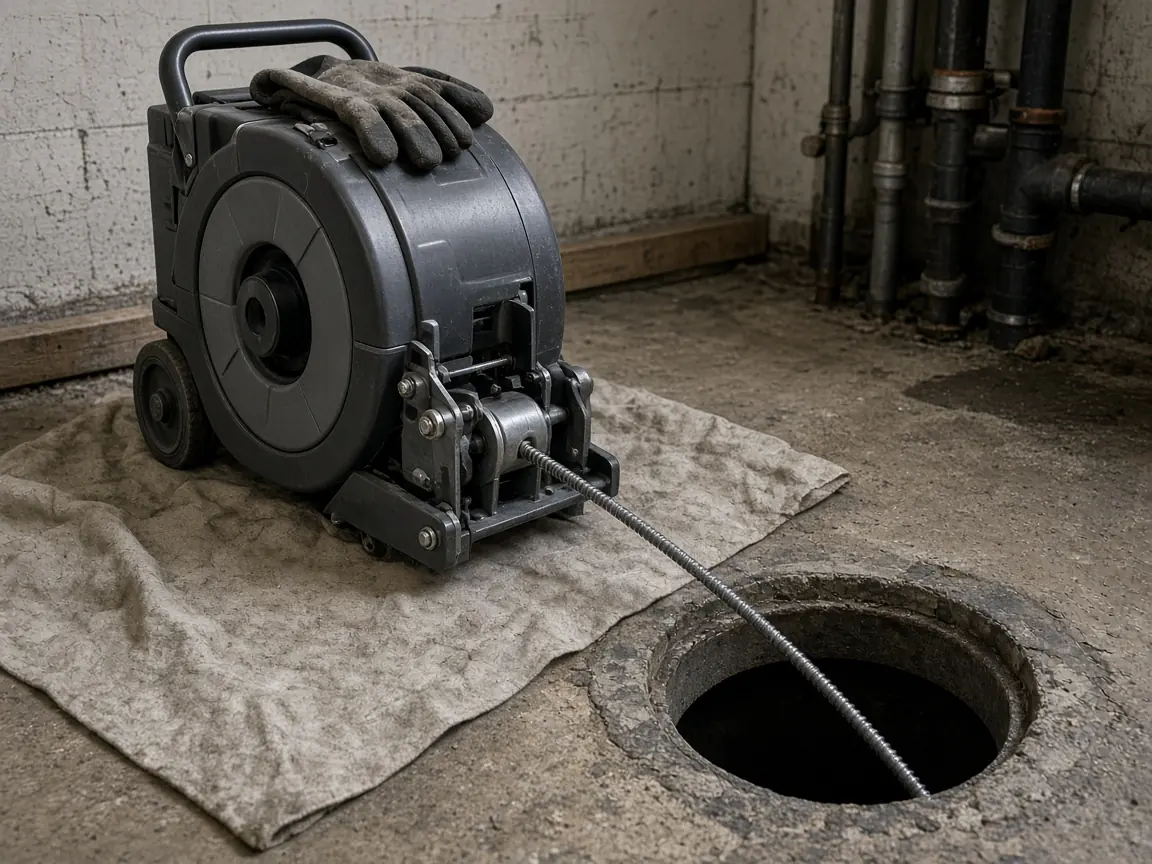
Need help with drain cleaning in Lakewood? Call, describe the problem and ask whether your address is covered. Lakewood is west of Denver. Calls come from Belmar, Bear Creek and the rest of the city. Drain cleaning in Lakewood starts with one question: is it one drain or several? A single slow sink or tub is a branch line clog, usually close to the fixture. Several drains backing up at once, especially into a basement floor drain, points to the main sewer line. The answer decides the equipment and how urgent it is.
Safe checks before you call from Lakewood
- Stop running water into the clogged fixture.
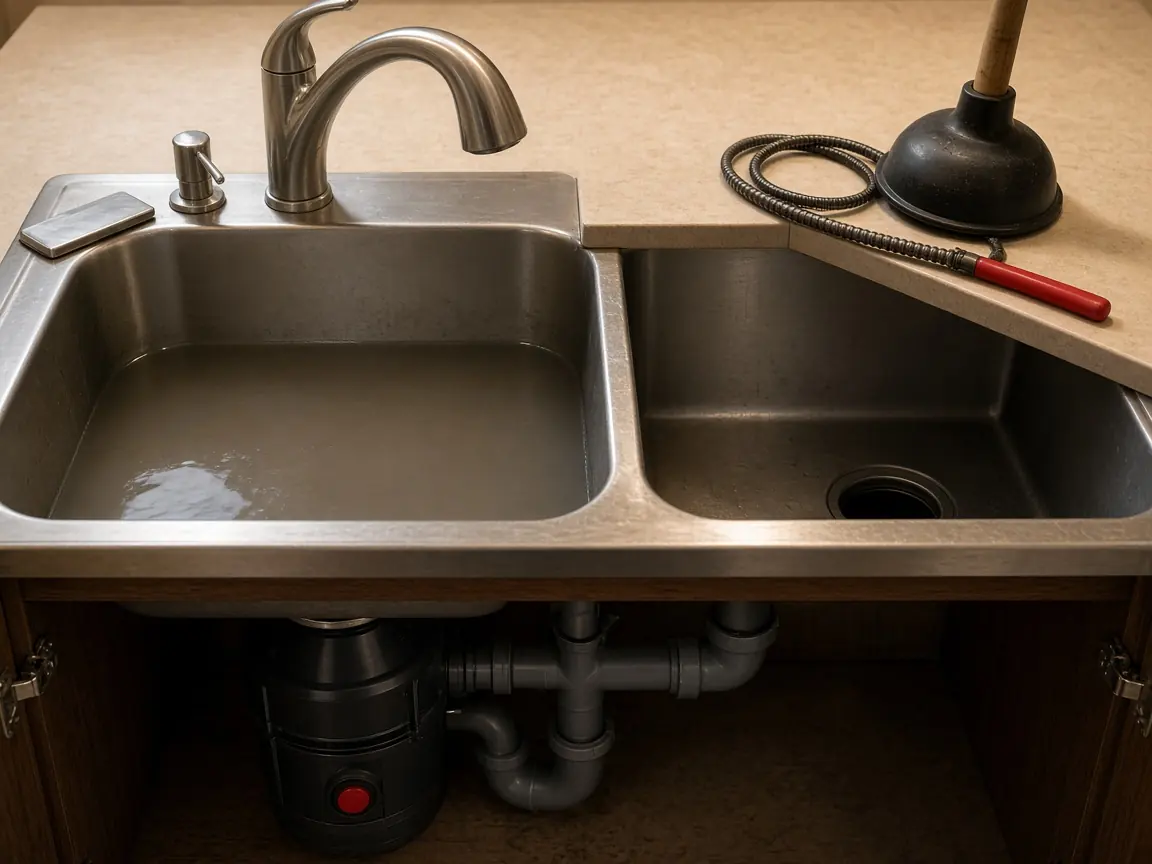
- Try a plunger on a single sink or toilet, but don't plunge if sewage is backing up elsewhere.
- Skip chemical drain cleaners, which can harm old pipes and the person who opens the line.
- If more than one fixture is backing up, stop using water in the house.
Branch line clogs
Kitchen sinks clog with grease, food scraps and coffee grounds. Bathroom sinks and tubs clog with hair and soap scum. Laundry drains clog with lint. These clogs usually sit within a few feet of the fixture or where the branch joins a larger line. A hand auger or small drum machine run through the drain or trap clears most of them, and removing the trap often helps.
Main line clogs
When toilets gurgle as the washer drains, or sewage shows up at the basement floor drain, the main line is blocked. In older Denver neighborhoods, roots in clay pipe joints are common. Grease, wipes and sagging sections cause blockages too. Main line cleaning is done through a cleanout with a larger cable machine, sometimes followed by hydro jetting.
Water still running or not sure what to do next? Call.
Call 000 000 0000Cable machines, jetting and cameras
A cable machine spins a cutting head through the pipe to break up clogs and roots. Hydro jetting uses high-pressure water to scour grease and sludge off pipe walls, which can clear lines more completely. A sewer camera shows the inside of the pipe so you know whether the clog was a one-time problem or a sign of a damaged pipe. Ask which method fits your pipe's age and material.
Skip the chemical drain openers
Caustic drain cleaners rarely clear a real blockage, can damage older pipes and traps, and make the job dangerous for whoever opens the drain next. Enzyme products are gentler but slow. For a stubborn clog, a plunger or a small hand auger is safer. For repeat or whole-house clogs, call.
Habits that prevent clogs
Wipe greasy pans into the trash, not the sink. Use strainers in kitchen sinks and tubs. Don't flush wipes, even ones labeled flushable. Run plenty of water with the disposal. If you have big trees near the sewer line, a periodic camera check can catch root growth before it causes a backup.
How drains clog in Denver-area homes
Drain problems come in two kinds. A single slow sink, tub or toilet usually means a clog in that fixture's trap or branch line: grease and food in kitchens, hair and soap in bathrooms, too much paper or a dropped object in toilets. Several fixtures backing up at once, especially the basement floor drain, points to the main sewer line, where roots, grease, wipes, sags and broken pipe are the usual causes. In older Denver neighborhoods with mature trees and clay laterals, roots are a frequent culprit.
Clearing a drain is only half the job when it keeps happening. A camera inspection after clearing shows whether there's a root intrusion, a belly, an offset joint or a break, and that decides whether the answer is periodic maintenance, hydro jetting, a spot repair or replacement. Chemical drain cleaners can damage older pipes and make the work more hazardous for whoever opens the line, so mention it if you've used one.
Good questions to ask about drain cleaning in Lakewood
- Was the clog in a branch line or the main line?
- Would a camera inspection after clearing tell us more?
- Is cabling enough, or is hydro jetting a better fit for this pipe?
- What can we change at home to keep it from coming back?
Mistakes to avoid
Avoid pouring chemical drain cleaners into a fixture that's completely stopped, renting a large cable machine for a main line without knowing the pipe's condition, and flushing wipes or pouring grease down the kitchen drain. Each one can turn a simple clog into a damaged pipe or a hazardous cleanup.
Drain Cleaning in Lakewood: local notes
Lakewood is full of 1950s and 1960s brick ranches and split-levels, many with basements and original galvanized supply lines or clay sewer laterals. Lakewood is served by several water and sanitation districts, so the first step on a meter or sewer main problem is finding the district named on your bill.
Water in Lakewood comes from one of several water districts depending on the address, so check your bill. Permits come from the building department for the City of Lakewood. Gas service in most of the metro is from Xcel Energy, and any digging needs Colorado 811 locates first.
Landmarks near you
Near Crown Hill Park, the Jefferson County open space park on the Lakewood and Wheat Ridge line, or closer to Belmar, the downtown district on the old Villa Italia site? The call is the same: describe the problem, share your cross streets and ask whether you're covered. See Crown Hill Park. See Belmar.
Handy when you call
- Which drains are slow or backing up
- Whether the basement floor drain is involved
- Where the cleanout is, if you know
- When the line was last cleaned
- Your Lakewood address or nearest cross streets
The steps
- Call the number on this page.
- Describe the problem and anything you've switched off.
- Give your Lakewood cross streets and ask whether you're covered.
- Ask about pricing and permits. The provider sets prices, not this website.
More for Lakewood
- Plumbing help in Lakewood: housing, utilities and permits
- Main Sewer Line Clog in Lakewood
- Hydro Jetting in Lakewood
- Clogged Kitchen Sink in Lakewood
- Drain Cleaning nearby: Wheat Ridge, Golden, Littleton, and Denver
- Guide: Sewage in the Basement Floor Drain: Causes and Cleanup Safety