
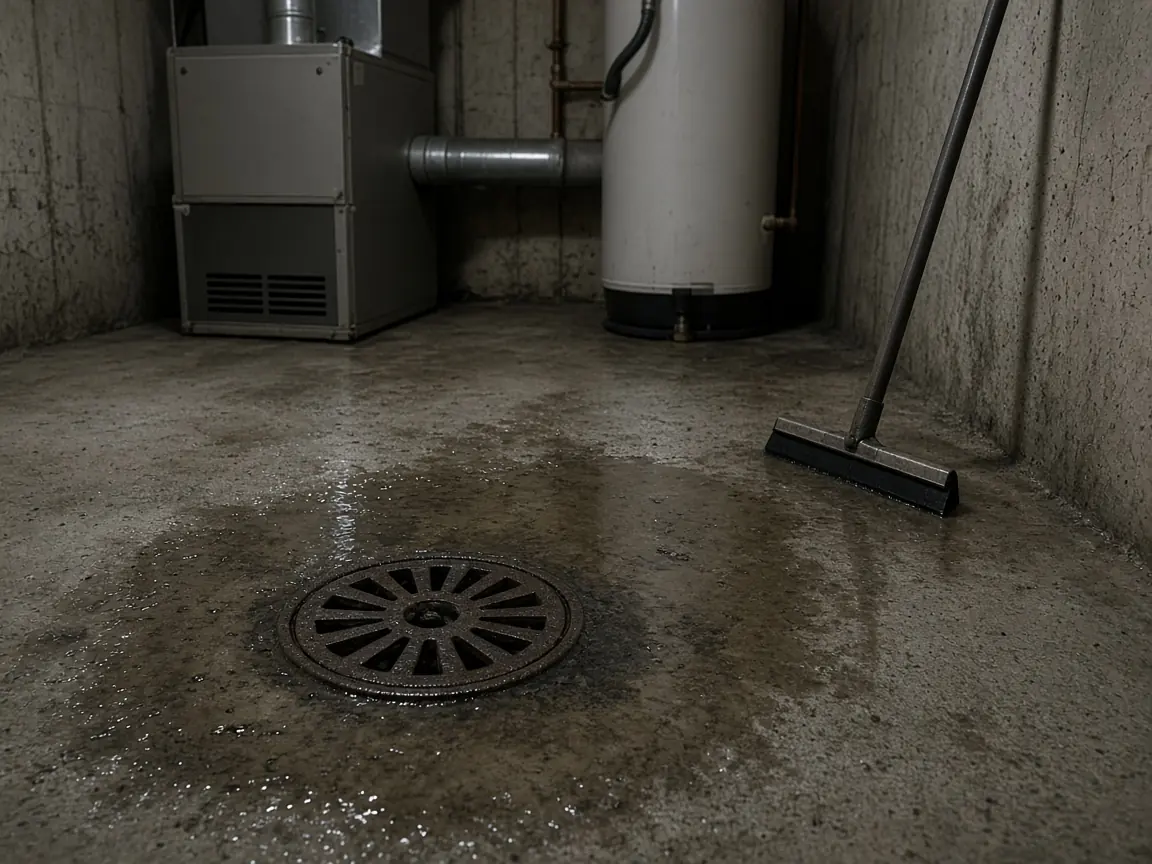
Sewage coming up through a basement floor drain in a Denver home almost always means the sewer line is blocked somewhere downstream of that drain. The floor drain is usually the lowest opening in the house, so it's where water shows up first when the line can't carry it away. Stop using water right away. Every flush, shower and load of laundry adds to the backup.
Safety first
Sewage carries bacteria and viruses. Keep children and pets out of the area. Don't walk through it barefoot. If water is near outlets, appliances or the electrical panel, don't enter unless you can safely switch off power from a dry spot. Wear rubber boots, gloves and eye protection if you must go in.
Common causes
- Tree roots. Older Denver neighborhoods have mature trees and clay sewer laterals, and roots find their way into joints.
- Grease and wipes. Grease builds up and so-called flushable wipes don't break down.
- Broken or sagging pipe. Clay, Orangeburg and cast iron age and fail. Shifting soils can cause sags or breaks. See how swelling soils stress sewer lines.
- Public main problems. Less often, the blockage is in the city main.
Water still running or not sure what to do next? Call.
Call 000 000 0000Is it your line or the main?
If only your house is affected, the problem is likely your lateral. If neighbors also have backups, contact the city or sanitation district. In Denver, start with the City and County of Denver. In Denver, the sewer lateral from your house to the main is generally the owner's responsibility. Read who owns the sewer line in Denver.
What a plumber does
Clear the line from a cleanout with a cable machine or hydro jetter, then run a camera to find the cause. Roots, a sag, a break or a grease buildup each need a different fix. See sewer backup and main sewer line clog.
Cleanup
Small backups on concrete can be cleaned with care. Remove standing water, then clean and disinfect hard surfaces. Porous materials soaked by sewage, like carpet, padding and drywall, generally need to be removed. Larger backups, finished basements and anything involving HVAC equipment usually call for a professional cleanup company. Photograph everything for insurance before cleanup.
Prevention
- Keep grease out of drains and only flush toilet paper.
- Have lines with root history cleared on a schedule.
- Ask about a backwater valve, which lets sewage flow out but not back in. It may require a permit.
- Get a camera inspection before buying an older home.
Insurance
Standard homeowners policies often exclude sewer backup unless you add an endorsement. Check your policy before you need it.
Denver and suburban notes
Denver permits come from the City and County of Denver, while Aurora, Lakewood, Arvada and the other suburbs run their own building departments, and Highlands Ranch goes through Douglas County. Water and sewer service comes from Denver Water, city utilities or special districts, depending on the address. Each location page links the official sites.
Keep this handy
The plumbing emergency checklist puts the first steps for burst pipes, sewer backups, gas smells, leaking water heaters and frozen pipes on one printable page. Tape it next to the main water shutoff, and make sure everyone in the house knows where that valve is and how to close it.
Want to talk it through?
Call the number on this page and explain what you're seeing, what kind of house it is and what you've already tried or shut off. Give your address or nearest cross streets and ask whether you're covered. You'll get an answer on the call, and you can ask how pricing works and whether a permit applies before anything is scheduled.
When to call instead of waiting
Call if water won't stop, if sewage is backing up, if the problem keeps returning, or if the fix means opening gas, venting, electrical or buried lines. If you smell gas, leave first and call Xcel Energy or 911 from outside. For everything else, have your address and a short description of the problem ready.
Sources checked
Reviewed November 13, 2026. Confirm anything important with the agency, since rules and programs change.