
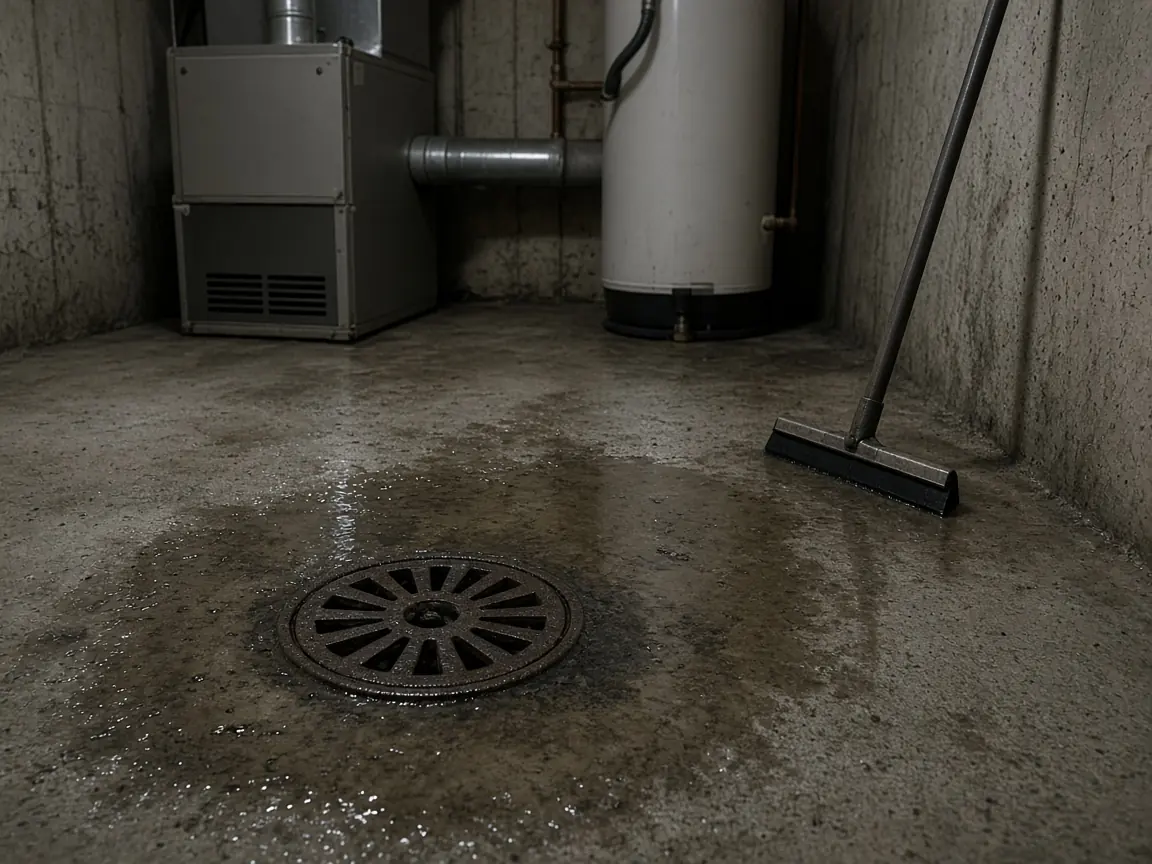
For sewer backup in Lakewood, CO, one call gets things moving. Explain what you're seeing, what you've shut off, and ask whether your Lakewood address is covered. We hear from Applewood's edge and Belmar often. Sewage coming up a basement floor drain in Lakewood almost always means the main sewer line is blocked, and every gallon you use in the house ends up on the basement floor. Stop using water right away, keep people and pets away, and call. Most backups trace to roots, grease or a damaged section of the lateral.
First steps
- Stop running water anywhere in the house: no flushing, laundry or dishes.
- Keep people and pets away from the sewage.
- Don't use chemical drain openers.
- If neighbors also have backups, call the city or sanitation district about the main.
Why the floor drain is where it shows up
The basement floor drain is usually the lowest opening on the sewer system. When the main line is blocked, water from upstairs toilets, sinks, showers and the washing machine has nowhere to go and rises at the lowest point. Sometimes it shows up first in a basement shower or toilet. If only one fixture backs up, the problem is likely a branch line, not the main.
Common causes
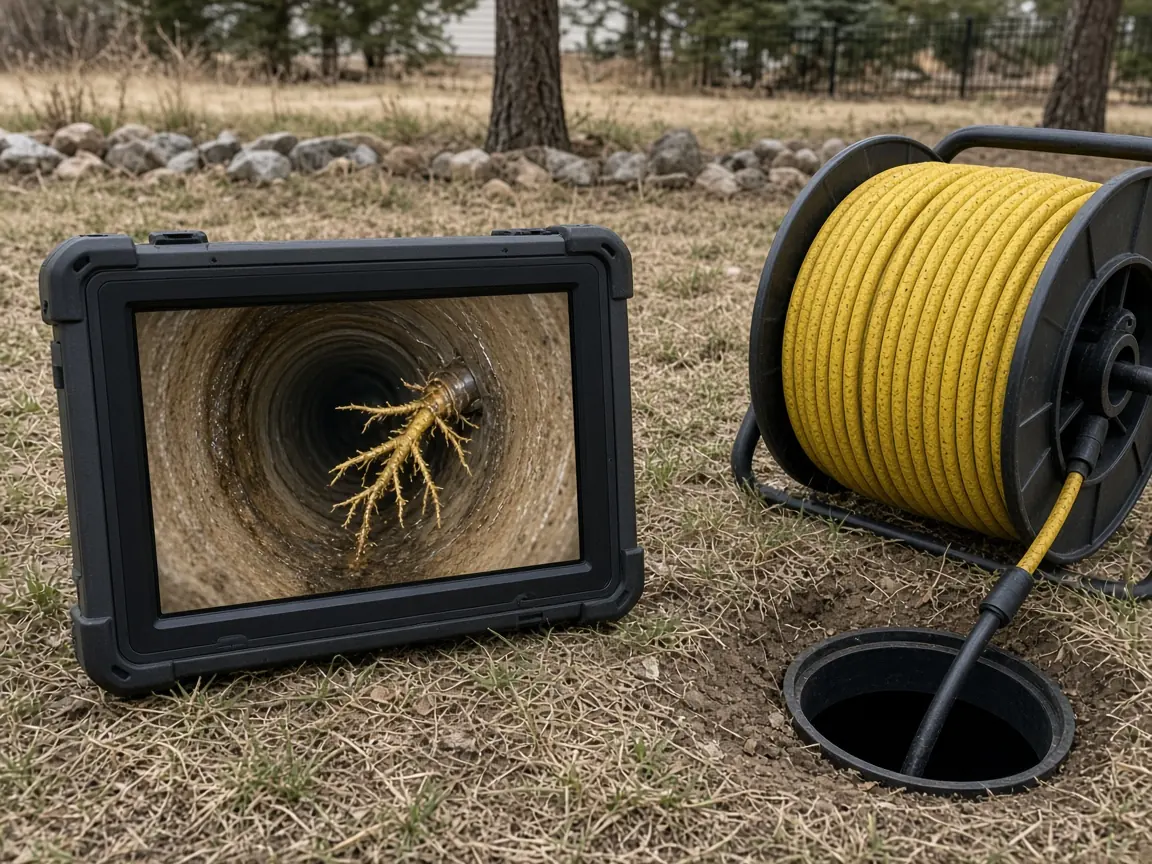
Tree roots that grow into joints of older clay sewer laterals are a top cause in mature neighborhoods. Grease from kitchens, wipes labeled flushable, and sagging or offset sections of pipe where waste collects are others. Orangeburg pipe, a fiber pipe used in some mid-century homes, can deform and collapse. Occasionally the city or district main is blocked, which often affects several houses on the street at once.
Water still running or not sure what to do next? Call.
Call 000 000 0000Clearing the line
The provider clears the main line through a cleanout, usually with a cable machine that cuts through roots and debris, and sometimes with a hydro jetter that scours the pipe walls. Once flow is restored, they should run water to confirm it drains. A camera inspection afterward shows why the line backed up, whether that's roots, a belly, a break or grease, and helps you decide whether it needs repair.
Who owns the sewer line?
In Denver, the sewer lateral from the house to the city main is generally the property owner's responsibility, including the part under the street in many cases. Suburban cities and sanitation districts have their own rules. If several neighbors have backups at the same time, the public main may be blocked, so call your city or district. Our guide on who owns the sewer line explains more.
Cleanup safety
Sewage carries bacteria and viruses. Wear gloves and boots, keep children and pets away, and don't use the affected area until it's cleaned and disinfected. Porous materials like carpet and drywall that sewage soaked usually need to be removed. Professional cleanup is recommended for anything beyond a small amount. Check your insurance, since sewer backup coverage is often a separate endorsement.
Preventing the next one
If roots caused it, regular maintenance or a permanent repair like lining or replacement may be needed. Keep grease and wipes out of drains. A backwater valve can stop city sewer surges from entering the house, but it doesn't help with blockages in your own lateral. Know where your cleanout is and keep it accessible.
Why emergencies hit Denver homes the way they do
Most Denver-area houses have basements or crawlspaces, and that's where emergencies tend to show up first: a split pipe along a rim joist, sewage at the floor drain, water around the base of the water heater. Front Range winters bring sudden arctic cold after mild weeks, so freeze damage clusters in a few days each winter, often showing up as pipes thaw. Older homes add galvanized supply pipe, cast iron drains and clay sewer laterals, all of which fail with age. The common thread is that the first few minutes matter: knowing where the main shutoff is, keeping away from water near electrical equipment and leaving the house at once if you smell gas.
Once the immediate danger is handled, the repair itself is usually ordinary plumbing work: replacing a split section, clearing and inspecting a sewer line, or repairing gas piping after the utility has made things safe. Many of those repairs need a permit and inspection, and some, like sewer lateral repairs under a street, involve the city as well. Asking about permits on the first call avoids surprises later.
Good questions to ask about emergency plumbing in Lakewood
- Is the water, gas or sewage situation safe to wait on, and what should I keep shut off?
- What caused the failure, and are other pipes or fittings at risk?
- Will the repair need a permit or a utility to be involved?
- How is the work priced, and what happens if more damage turns up?
Mistakes to avoid
Common mistakes make emergencies worse: forcing a seized main valve until it breaks, walking into water near outlets, using a torch to thaw a frozen pipe, running more water during a sewer backup, or going back inside to look for a gas leak. Shut off what you safely can, stay clear of hazards and call.
Sewer Backup in Lakewood: local notes
Lakewood is full of 1950s and 1960s brick ranches and split-levels, many with basements and original galvanized supply lines or clay sewer laterals. Lakewood is served by several water and sanitation districts, so the first step on a meter or sewer main problem is finding the district named on your bill.
Water in Lakewood comes from one of several water districts depending on the address, so check your bill. Permits come from the building department for the City of Lakewood. Gas service in most of the metro is from Xcel Energy, and any digging needs Colorado 811 locates first.
Landmarks near you
Near Belmar, the downtown district on the old Villa Italia site, or closer to Bear Creek Lake Park, the large city park and reservoir in south Lakewood? The call is the same: describe the problem, share your cross streets and ask whether you're covered. See Belmar.
Handy when you call
- Which drains are backing up, and whether it's sewage
- Whether you know where the cleanout is
- Whether neighbors have the same problem
- When the line was last cleared
- Your Lakewood address or nearest cross streets
The steps
- Call the number on this page.
- Describe the problem and anything you've switched off.
- Give your Lakewood cross streets and ask whether you're covered.
- Ask about pricing and permits. The provider sets prices, not this website.
More for Lakewood
- Plumbing help in Lakewood: housing, utilities and permits
- Main Sewer Line Clog in Lakewood
- Sewer Camera Inspection in Lakewood
- Tree Root Removal in Lakewood
- All emergency plumbing in Lakewood
- Sewer Backup nearby: Wheat Ridge, Golden, Littleton, and Denver
- Guide: Sewage in the Basement Floor Drain: Causes and Cleanup Safety