
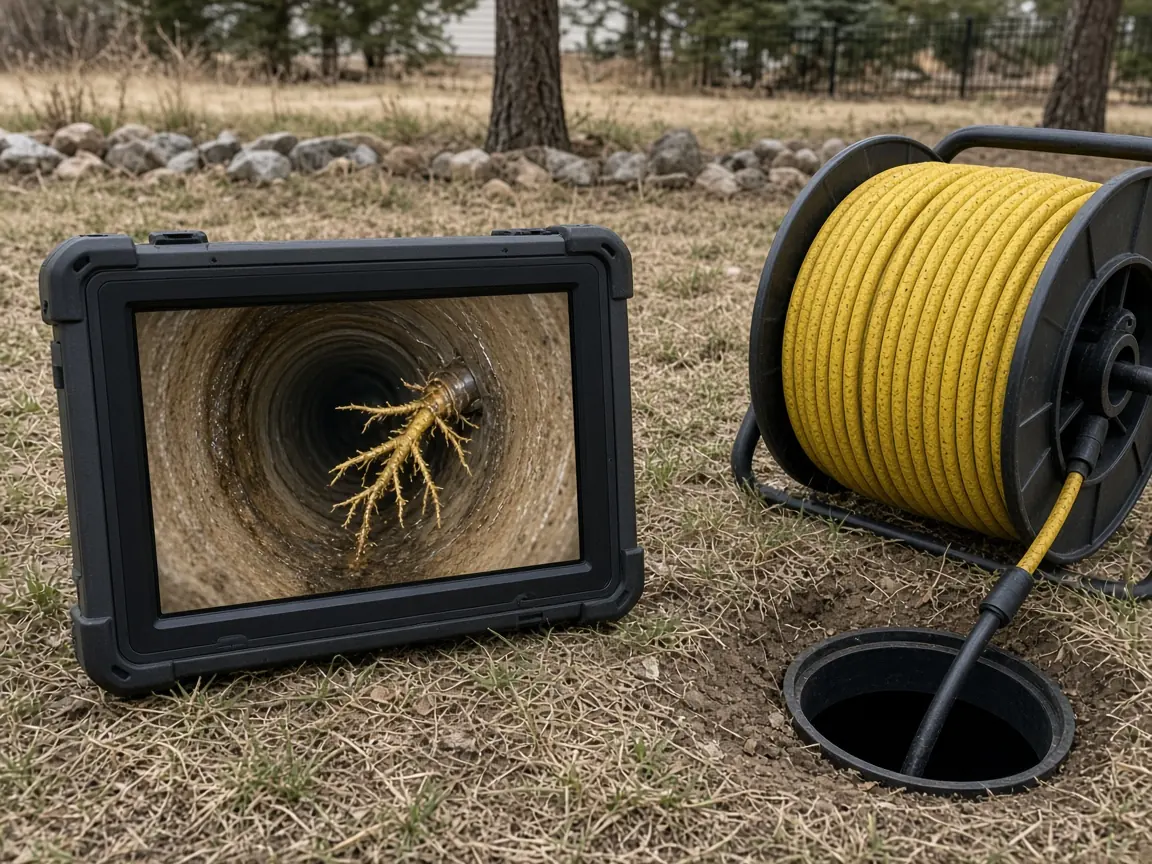
In Denver, the sewer lateral, the pipe that runs from your house to the public sewer main, is generally the property owner's responsibility, often including the part under the street. That surprises many homeowners. It means clogs, root intrusion, sags and breaks in the lateral are usually yours to fix, even when the problem is past the property line. Check the City and County of Denver website for current rules, since details can change.
Your pipe vs the city's
- The lateral. From your house plumbing to the connection at the main. Generally the owner's.
- The main. The public sewer under the street. The city or sanitation district maintains it.
The cleanout, a capped pipe in the basement or yard, is where a plumber usually gets into the lateral.
Why it matters
When a backup happens, the first question is where the blockage is. A camera inspection answers that. If it's in your lateral, you hire the repair. If it's in the main, the city or district handles it. See sewer camera inspection.
Water still running or not sure what to do next? Call.
Call 000 000 0000Repairs in the street
Repairs under the street or sidewalk involve permits, traffic control and coordination with the city, plus Colorado 811 locates before digging. They cost more than yard repairs. Trenchless methods like pipe lining or pipe bursting can avoid some excavation. See trenchless sewer repair.
Common lateral problems in Denver
Older neighborhoods often have clay laterals with joints that let roots in, or Orangeburg pipe from the mid-century era that deforms over time. Cast iron corrodes. Front Range swelling soils can shift pipes. See expansive soil and sewer lines and the Colorado Geological Survey on swelling soils.
Buying a home
Have the lateral scoped before closing. A camera inspection is cheap compared with a surprise replacement.
Suburbs and districts
Aurora, Lakewood, Arvada, Westminster and other cities, plus many special sanitation districts, set their own rules for lateral responsibility. Some districts maintain more of the line than Denver does. Check with the district named on your bill. Each location page links the city's official site.
Insurance and warranties
Standard homeowners policies often don't cover laterals. Some insurers and utilities offer service line coverage. Read terms carefully.
Related
See sewer line repair, sewer line replacement and sewage backup in the basement.
When to call instead of waiting
Call if water won't stop, if sewage is backing up, if the problem keeps returning, or if the fix means opening gas, venting, electrical or buried lines. If you smell gas, leave first and call Xcel Energy or 911 from outside. For everything else, have your address and a short description of the problem ready.
Denver and suburban notes
Denver permits come from the City and County of Denver, while Aurora, Lakewood, Arvada and the other suburbs run their own building departments, and Highlands Ranch goes through Douglas County. Water and sewer service comes from Denver Water, city utilities or special districts, depending on the address. Each location page links the official sites.
Keep this handy
The plumbing emergency checklist puts the first steps for burst pipes, sewer backups, gas smells, leaking water heaters and frozen pipes on one printable page. Tape it next to the main water shutoff, and make sure everyone in the house knows where that valve is and how to close it.
Want to talk it through?
Call the number on this page and explain what you're seeing, what kind of house it is and what you've already tried or shut off. Give your address or nearest cross streets and ask whether you're covered. You'll get an answer on the call, and you can ask how pricing works and whether a permit applies before anything is scheduled.
Sources checked
Reviewed November 13, 2026. Confirm anything important with the agency, since rules and programs change.