
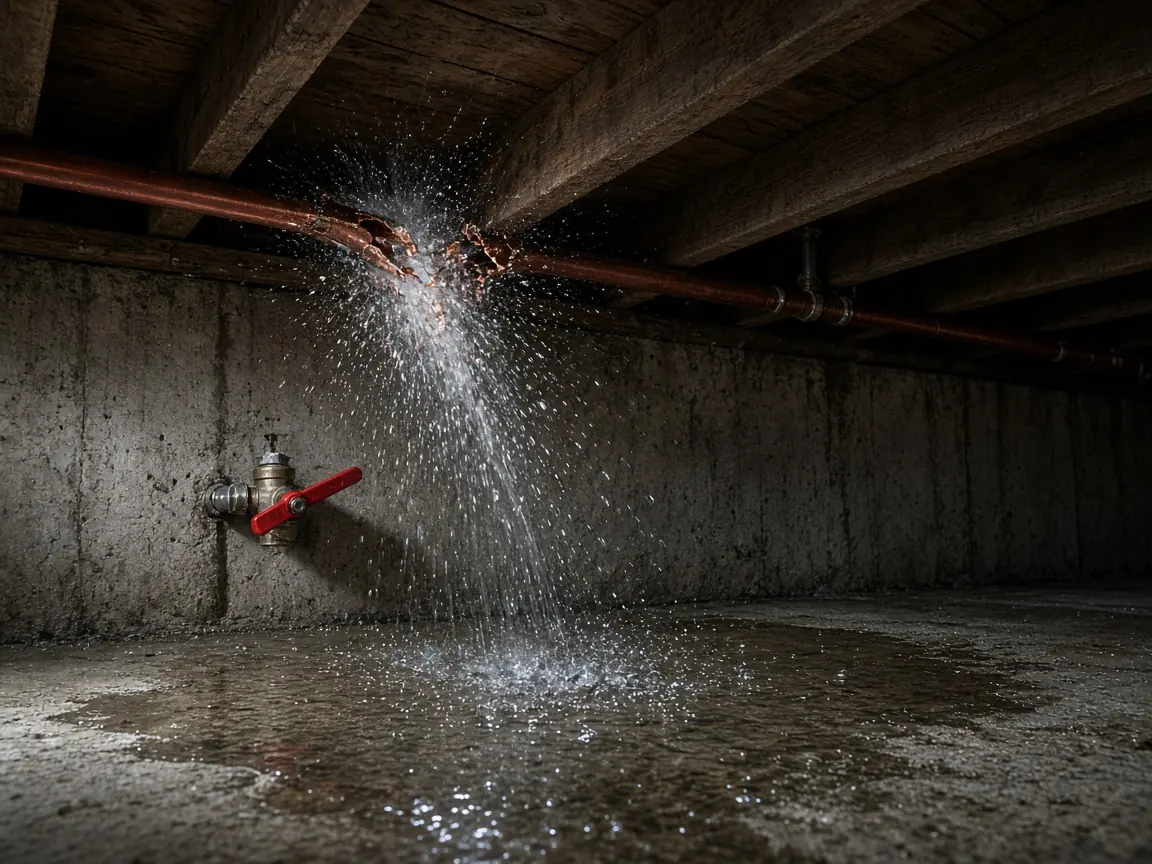
When a pipe bursts in a Denver home, close the main water shutoff first. Every minute it runs, water spreads through floors, drywall and insulation. Most Denver houses have the main shutoff in the basement where the service line enters, usually on the front wall facing the street. Some homes with crawlspaces or slab foundations have it in a utility closet or near the water heater. If you don't know where yours is, read where is the main water shutoff in a Denver house? now, before you need it.
The first 15 minutes
- Close the main. Turn a round handle clockwise until it stops, or turn a lever handle a quarter turn so it sits across the pipe.
- Drain the lines. Open the lowest faucet in the house, often a basement laundry tub or utility sink, and a cold tap on the top floor. That relieves pressure and drains what's left in the pipes.
- Turn off the water heater. Switch a gas heater to pilot or off, or switch off the breaker for an electric one. That protects it while the supply is off.
- Mind the electricity. If water is near outlets, cords or the panel, only switch off circuits if you can reach the panel standing on dry ground. Otherwise stay out of the area.
- Move belongings. Lift what you can off the floor and away from the water.
- Document. Photograph the break, standing water and damaged items before cleanup.
If the main won't close
Old gate valves in Denver basements can be seized or break when forced. If the main won't turn, the next shutoff is the curb stop, usually in a small cover near the sidewalk or property line. It takes a special key, and the utility is responsible for it in many cases. Denver Water customers can contact Denver Water about a curb stop. Suburban customers contact their own utility. Don't force a stuck valve with a wrench extension, since a broken stem can make things worse.
Water still running or not sure what to do next? Call.
Call 000 000 0000Why Denver pipes burst
Most bursts here come from freezing. During a hard Front Range cold snap, pipes on exterior walls, in crawlspaces, unheated garages and under sinks on outside walls can freeze. The ice itself isn't usually where the split happens. Pressure builds between the ice blockage and a closed faucet, and the pipe splits there. That's why a burst often shows up when the pipe thaws, sometimes hours after the cold has passed. Old galvanized pipe, corroded copper and failed fittings can burst without a freeze too. The National Weather Service Boulder office posts cold warnings that are worth watching. See how Denver homeowners keep pipes from freezing.
Drying out
Mop up standing water, run fans and a dehumidifier, and pull up wet rugs. Open cabinet doors and closets. Drywall and insulation that stay wet for days can grow mold, so larger water losses often call for a professional drying company. Keep receipts.
Getting the pipe repaired
A plumber cuts out the split section and replaces it, often with copper or PEX, then checks nearby pipes for other freeze damage. Turn the water back on slowly and watch for more leaks. If the break was in a wall or ceiling, expect a small opening for access. If pipes keep bursting in the same exterior wall or crawlspace, ask about rerouting or insulating them. See burst pipe repair and frozen pipe repair.
Insurance notes
Call your insurer early. Ask how they treat sudden bursts versus gradual leaks, whether they want a plumber's report, and whether to wait for an adjuster before tearing anything out. Keep the damaged pipe section if you can.
Want to talk it through?
Call the number on this page and explain what you're seeing, what kind of house it is and what you've already tried or shut off. Give your address or nearest cross streets and ask whether you're covered. You'll get an answer on the call, and you can ask how pricing works and whether a permit applies before anything is scheduled.
When to call instead of waiting
Call if water won't stop, if sewage is backing up, if the problem keeps returning, or if the fix means opening gas, venting, electrical or buried lines. If you smell gas, leave first and call Xcel Energy or 911 from outside. For everything else, have your address and a short description of the problem ready.
Denver and suburban notes
Denver permits come from the City and County of Denver, while Aurora, Lakewood, Arvada and the other suburbs run their own building departments, and Highlands Ranch goes through Douglas County. Water and sewer service comes from Denver Water, city utilities or special districts, depending on the address. Each location page links the official sites.
Keep this handy
The plumbing emergency checklist puts the first steps for burst pipes, sewer backups, gas smells, leaking water heaters and frozen pipes on one printable page. Tape it next to the main water shutoff, and make sure everyone in the house knows where that valve is and how to close it.
Sources checked
Reviewed November 13, 2026. Confirm anything important with the agency, since rules and programs change.