
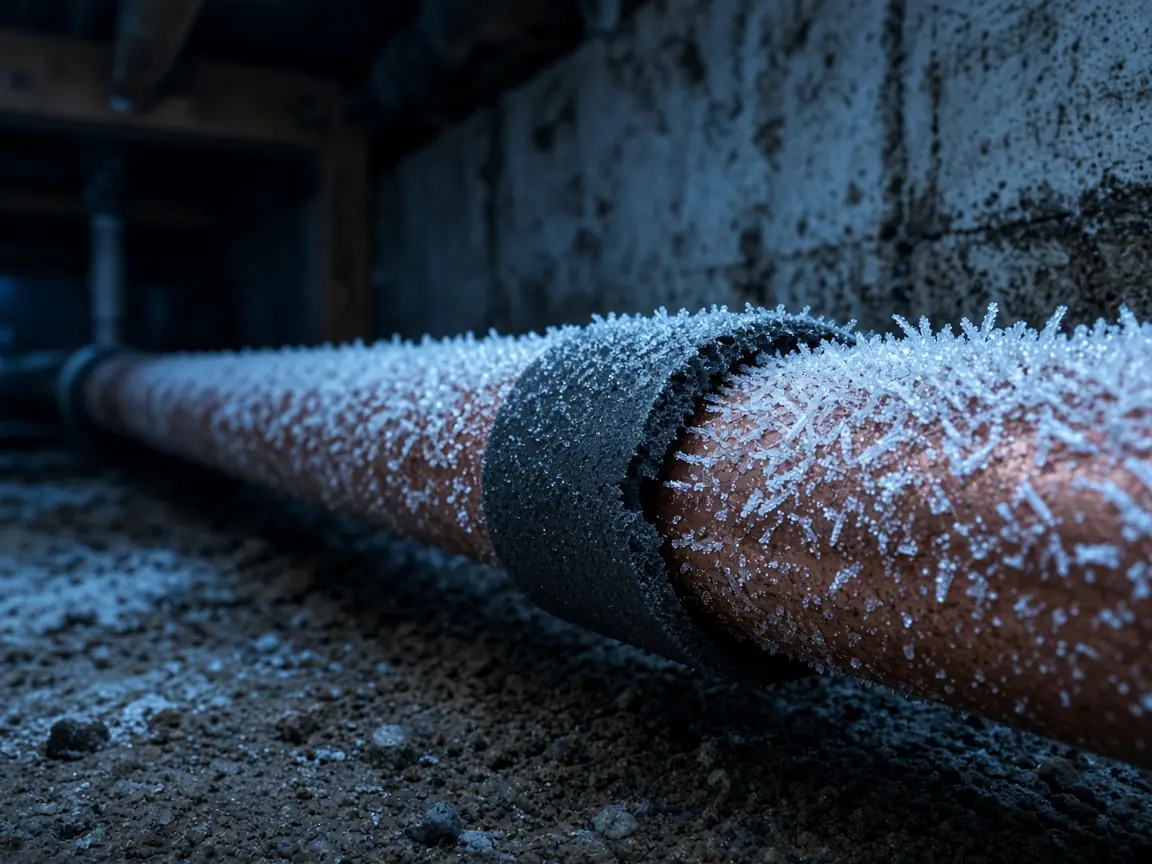
Most frozen pipes in Denver homes are in the same handful of places: exterior walls, crawlspaces, unheated garages, cabinets on outside walls and anywhere near a drafty rim joist. Front Range winters swing between mild days and sharp arctic cold, and those sudden drops catch houses unprepared. A few steps before a cold snap prevent most problems.
Where pipes freeze
- Hose bibs. Outdoor faucets freeze if hoses stay connected or the bib isn't frost-free.
- Exterior walls. Kitchen and bathroom supply lines on outside walls are common trouble spots.
- Crawlspaces and garages. Unheated spaces get as cold as outdoors.
- Rim joists. Pipes that run along the top of a basement foundation wall sit next to cold air leaks.
- Sprinkler systems. Backflow preventers and lines left full of water crack.
Before cold weather
- Disconnect hoses and shut off and drain interior valves for hose bibs if they aren't frost-free.
- Winterize sprinklers. Have the system blown out and the backflow preventer drained in fall.
- Insulate pipes in crawlspaces, garages and along exterior walls. Foam sleeves are cheap.
- Seal air leaks around rim joists, pipe penetrations and crawlspace vents.
- Know your main shutoff and make sure it works. See finding your main water shutoff.
Water still running or not sure what to do next? Call.
Call 000 000 0000During a cold snap
- Keep the thermostat steady day and night.
- Open cabinet doors under sinks on exterior walls to let warm air in.
- Let a faucet served by vulnerable pipes drip slowly.
- Keep garage doors closed.
- Watch forecasts from the National Weather Service Boulder office.
If you're leaving town
Keep the heat on at a reasonable setting. Ask someone to check the house. For longer trips in winter, consider shutting off the main and draining the lines. Heating failures in empty homes cause some of the worst freeze damage.
Signs a pipe has frozen
No water or only a trickle from a faucet, frost on exposed pipe, or a bulge in the pipe. Leave the faucet open.
Thawing safely
Warm the pipe gently, starting nearest the faucet and working back. Use a hair dryer, heating pad or space heater kept clear of anything flammable. Never use a torch or open flame, which can start a fire or overheat the pipe. If you can't reach the frozen section, if you see a split, or if water starts spraying when it thaws, close the main and call. See frozen pipe repair and what to do when a pipe bursts.
Long-term fixes
Rerouting pipes away from exterior walls, adding insulation and air sealing, installing frost-free hose bibs and, in some cases, heat cable rated for the purpose. Ask a plumber which makes sense for your house.
When to call instead of waiting
Call if water won't stop, if sewage is backing up, if the problem keeps returning, or if the fix means opening gas, venting, electrical or buried lines. If you smell gas, leave first and call Xcel Energy or 911 from outside. For everything else, have your address and a short description of the problem ready.
Denver and suburban notes
Denver permits come from the City and County of Denver, while Aurora, Lakewood, Arvada and the other suburbs run their own building departments, and Highlands Ranch goes through Douglas County. Water and sewer service comes from Denver Water, city utilities or special districts, depending on the address. Each location page links the official sites.
Keep this handy
The plumbing emergency checklist puts the first steps for burst pipes, sewer backups, gas smells, leaking water heaters and frozen pipes on one printable page. Tape it next to the main water shutoff, and make sure everyone in the house knows where that valve is and how to close it.
Want to talk it through?
Call the number on this page and explain what you're seeing, what kind of house it is and what you've already tried or shut off. Give your address or nearest cross streets and ask whether you're covered. You'll get an answer on the call, and you can ask how pricing works and whether a permit applies before anything is scheduled.
Sources checked
Reviewed November 13, 2026. Confirm anything important with the agency, since rules and programs change.