
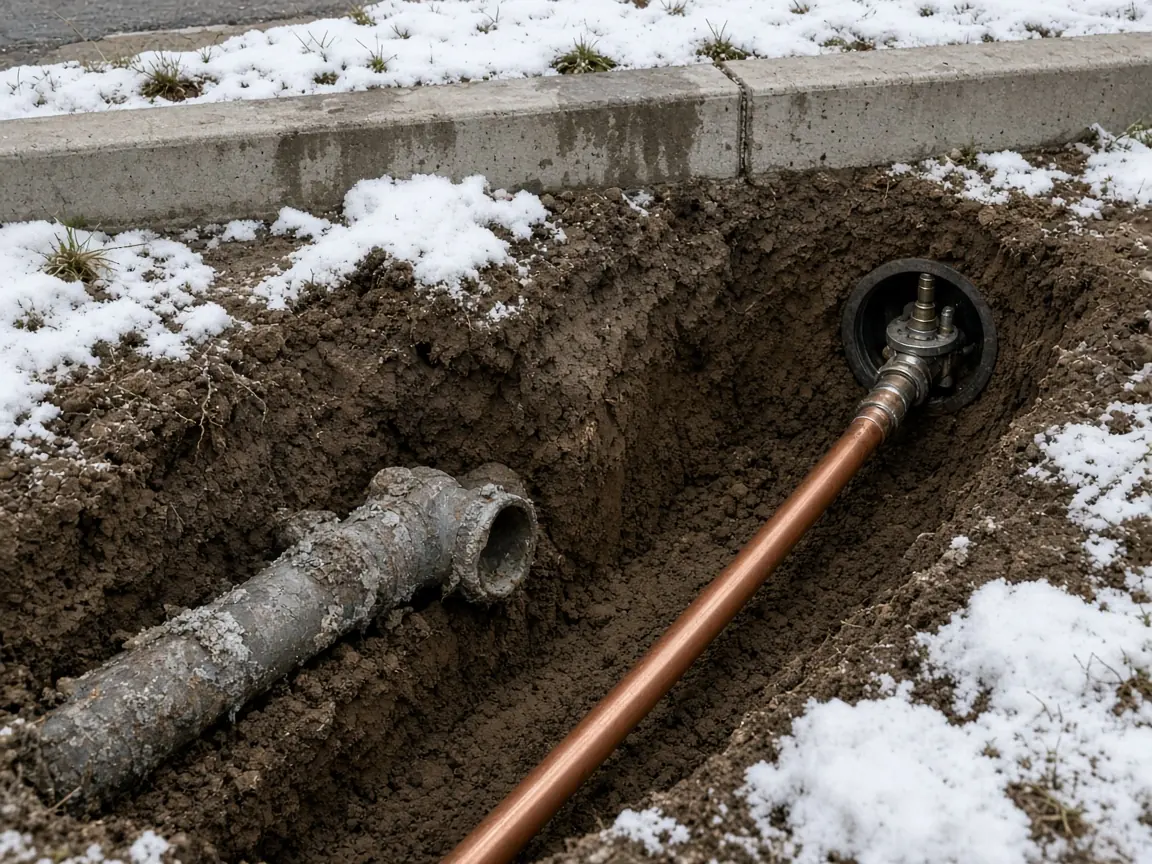
In most Denver houses, the main water shutoff is in the basement, on the wall that faces the street, right where the water service line comes through the foundation. It may be next to the meter or a pressure-reducing valve. Finding it now, and making sure it works, is the single most useful thing you can do before a plumbing emergency.
Where to look
- Basement homes. Front foundation wall, near the floor or a few feet up. Look behind shelving, inside utility rooms and near the water heater.
- Crawlspace homes. Just inside the crawlspace access or near where the line enters.
- Slab homes and newer builds. A utility closet, garage wall, near the water heater or in a box near the front of the house.
- Condos and townhomes. A unit shutoff may be in a closet or under a sink. Some buildings only have a shared shutoff. Ask the HOA.
Valve types
- Gate valve. A round handle. Turn clockwise many times to close. Old gate valves often stick or don't close fully.
- Ball valve. A lever handle. A quarter turn closes it, with the lever across the pipe.
Water still running or not sure what to do next? Call.
Call 000 000 0000Test it
Close the valve, then open a faucet. Water should stop after a moment. Open the valve again slowly. If it won't move, leaks at the stem, or doesn't stop the water, have it replaced with a ball valve. That's a small job compared with the damage from a burst pipe you can't stop.
The curb stop
Between the street and your house is a curb stop valve, usually under a small round or square cover near the sidewalk or property line. It takes a long curb key. In many cases the utility controls it. Denver Water customers can contact Denver Water about a curb stop. Suburban customers contact their own water provider. It's useful in an emergency when the house valve fails, and it's also where service line responsibility usually changes hands.
Label it
Hang a tag on the valve. Show everyone in the house where it is. Keep the area clear.
Other shutoffs
Every toilet and sink should have its own shutoff. The water heater has a cold supply valve on top. Hose bibs often have an interior shutoff. Knowing these lets you isolate a leak without shutting off the whole house.
Related
See what to do when a pipe bursts, water line repair and pipe leak repair.
Keep this handy
The plumbing emergency checklist puts the first steps for burst pipes, sewer backups, gas smells, leaking water heaters and frozen pipes on one printable page. Tape it next to the main water shutoff, and make sure everyone in the house knows where that valve is and how to close it.
Want to talk it through?
Call the number on this page and explain what you're seeing, what kind of house it is and what you've already tried or shut off. Give your address or nearest cross streets and ask whether you're covered. You'll get an answer on the call, and you can ask how pricing works and whether a permit applies before anything is scheduled.
When to call instead of waiting
Call if water won't stop, if sewage is backing up, if the problem keeps returning, or if the fix means opening gas, venting, electrical or buried lines. If you smell gas, leave first and call Xcel Energy or 911 from outside. For everything else, have your address and a short description of the problem ready.
Denver and suburban notes
Denver permits come from the City and County of Denver, while Aurora, Lakewood, Arvada and the other suburbs run their own building departments, and Highlands Ranch goes through Douglas County. Water and sewer service comes from Denver Water, city utilities or special districts, depending on the address. Each location page links the official sites.
Sources checked
Reviewed November 13, 2026. Confirm anything important with the agency, since rules and programs change.