
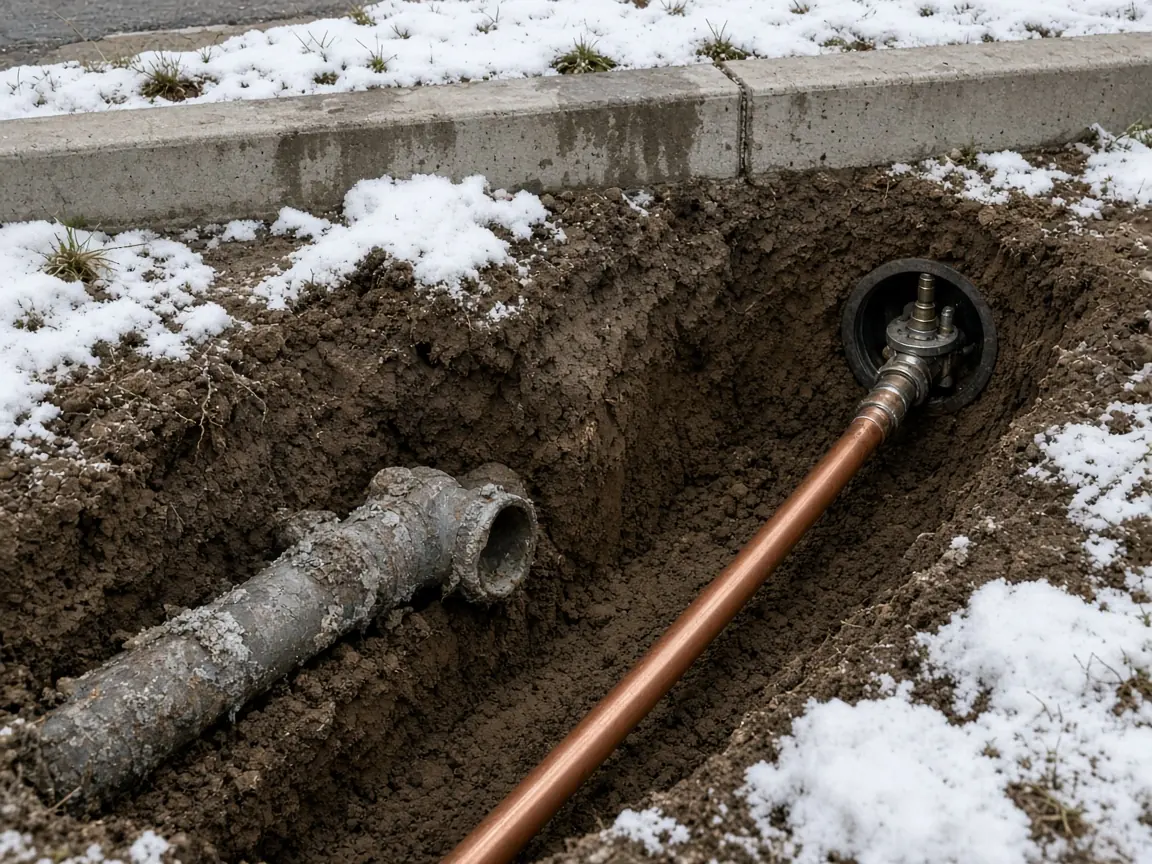
Some older homes in Denver have a lead service line, the pipe that brings water from the main to the house. Lead can get into drinking water as it passes through. Denver Water's Lead Reduction Program is Denver Water's effort to address this, and it includes Denver Water lead service line replacement. Details such as which addresses are included, timing and what the homeowner needs to do are set by Denver Water and can change, so check its pages for current information rather than relying on summaries.
Identifying a lead line
Find where the water line comes into your house, usually in the basement on the street side, before the main shutoff and meter. Look at the pipe:
- Lead is dull gray, soft, and scratches to a shiny silver with a key. A magnet won't stick.
- Copper is the color of a penny where scratched.
- Galvanized steel is gray, and a magnet sticks. Galvanized lines that were once connected to lead can also hold lead.
- Plastic is white, blue or black.
Denver Water also publishes inventory information and tools to look up an address. If you're unsure, ask a plumber to check.
While you wait
Denver Water's lead pages describe steps households can take, such as using filters certified for lead removal and running water before drinking when it has sat for hours. Follow its guidance, which is specific to its program.
Water still running or not sure what to do next? Call.
Call 000 000 0000Replacement work
Replacing a service line involves excavation or trenchless methods, coordination with the utility at the curb stop, permits and Colorado 811 locates. If your address is included in Denver Water's program, follow its process. If you're outside its area or want work done separately, talk to your utility and a licensed plumber. See water line repair.
Lead inside the house
Older homes can have lead solder on copper pipes or older brass fixtures. Replacing the service line doesn't change that. A plumber can point out older materials.
Suburbs
Aurora, Arvada, Westminster, Thornton, Englewood and other cities run their own water utilities or districts, with their own service line inventories. Check the utility named on your bill. Each location page lists the water provider.
Testing
Denver Water and many utilities offer information about water testing. A certified lab can also test.
Bottom line
Check what your line is made of, look up your address in your utility's inventory, and follow the utility's guidance. Don't rely on secondhand summaries for eligibility or costs.
Want to talk it through?
Call the number on this page and explain what you're seeing, what kind of house it is and what you've already tried or shut off. Give your address or nearest cross streets and ask whether you're covered. You'll get an answer on the call, and you can ask how pricing works and whether a permit applies before anything is scheduled.
When to call instead of waiting
Call if water won't stop, if sewage is backing up, if the problem keeps returning, or if the fix means opening gas, venting, electrical or buried lines. If you smell gas, leave first and call Xcel Energy or 911 from outside. For everything else, have your address and a short description of the problem ready.
Denver and suburban notes
Denver permits come from the City and County of Denver, while Aurora, Lakewood, Arvada and the other suburbs run their own building departments, and Highlands Ranch goes through Douglas County. Water and sewer service comes from Denver Water, city utilities or special districts, depending on the address. Each location page links the official sites.
Keep this handy
The plumbing emergency checklist puts the first steps for burst pipes, sewer backups, gas smells, leaking water heaters and frozen pipes on one printable page. Tape it next to the main water shutoff, and make sure everyone in the house knows where that valve is and how to close it.
Sources checked
Reviewed November 13, 2026. Confirm anything important with the agency, since rules and programs change.