
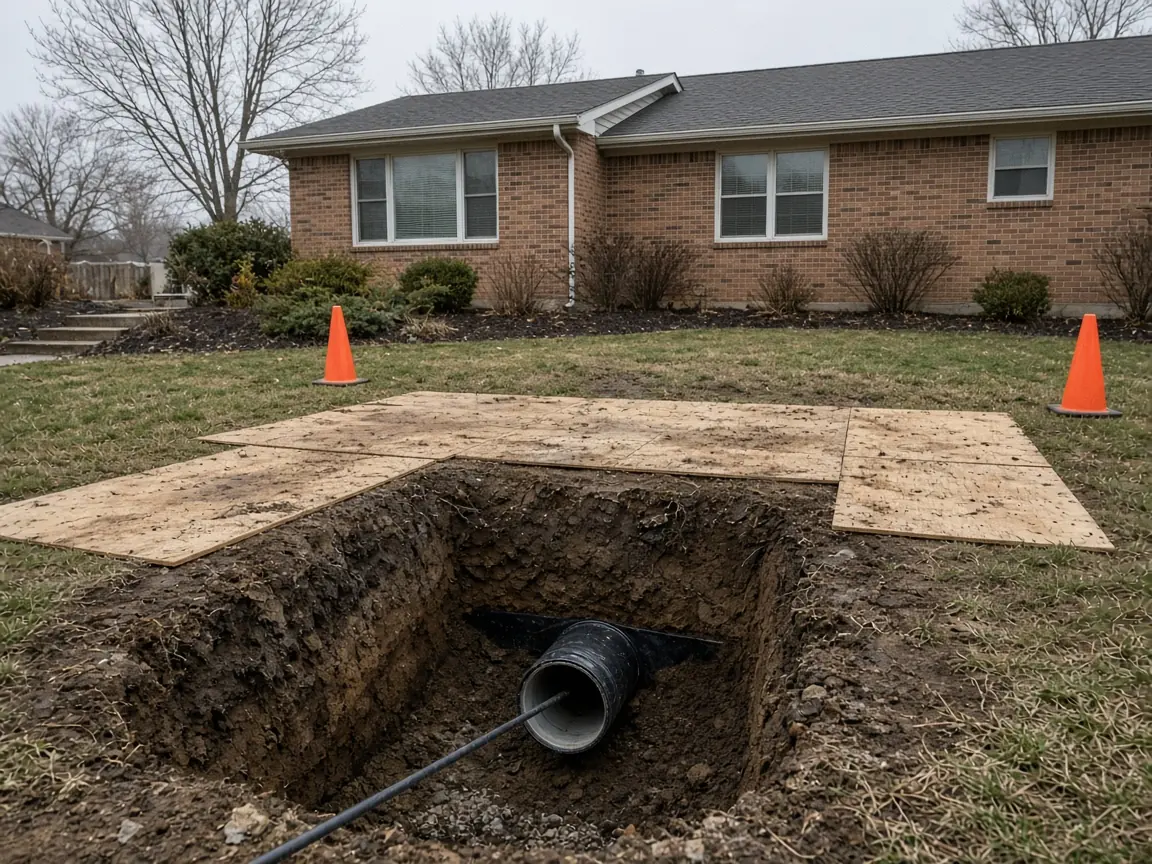
Much of the Denver area sits on clay soils that swell when they get wet and shrink when they dry. The Colorado Geological Survey on swelling soils describes swelling soils as a significant hazard along the Front Range. Houses get most of the attention, but buried pipes move too. Over years, that movement can pull sewer joints apart, create low spots where waste settles, and crack rigid pipe.
What happens to pipes
- Sags (bellies). A section settles lower than the rest. Water and solids collect there, causing recurring clogs.
- Offset joints. Pipe sections shift out of line, creating a lip that catches debris and lets roots in.
- Cracks and breaks. Rigid clay and old cast iron crack under stress.
- Foundation penetrations. Where the sewer leaves the house, movement between the foundation and soil can stress the pipe.
Warning signs
Recurring clogs in the main line, slow drains throughout the house, gurgling, sewage odors and backups in the basement floor drain. Soggy spots or sinkholes in the yard can point to a broken line.
Water still running or not sure what to do next? Call.
Call 000 000 0000Diagnosis
A sewer camera inspection shows sags, offsets, cracks and roots, and a locator marks where problems are and how deep.
Repair options
- Spot repair of a short section by excavation.
- Pipe lining to seal cracks and joints, when the pipe is still round and properly sloped.
- Pipe bursting or full replacement when the pipe is badly damaged or sagging.
Sags usually can't be fixed by lining, since a liner follows the existing pipe. They typically need excavation. See trenchless sewer repair and sewer line replacement.
Buying a house on expansive soil
If you're buying an older home on the Front Range, ask for a sewer camera inspection and look at foundation reports together. Cracks, sticking doors and uneven floors can go hand in hand with sewer sags and offsets. A recording of the lateral gives you facts to negotiate with, rather than guesses.
Water lines too
Supply lines can also be stressed. Flexible materials tolerate movement better than rigid ones.
Reduce soil movement
Keep downspouts and sprinklers from soaking soil next to the house. Fix plumbing leaks. Maintain grading. Avoid planting thirsty trees near sewer lines.
Dig safely
Any excavation needs Colorado 811 locates first.
Related
See who owns the sewer line in Denver and tree root removal.
Want to talk it through?
Call the number on this page and explain what you're seeing, what kind of house it is and what you've already tried or shut off. Give your address or nearest cross streets and ask whether you're covered. You'll get an answer on the call, and you can ask how pricing works and whether a permit applies before anything is scheduled.
When to call instead of waiting
Call if water won't stop, if sewage is backing up, if the problem keeps returning, or if the fix means opening gas, venting, electrical or buried lines. If you smell gas, leave first and call Xcel Energy or 911 from outside. For everything else, have your address and a short description of the problem ready.
Denver and suburban notes
Denver permits come from the City and County of Denver, while Aurora, Lakewood, Arvada and the other suburbs run their own building departments, and Highlands Ranch goes through Douglas County. Water and sewer service comes from Denver Water, city utilities or special districts, depending on the address. Each location page links the official sites.
Keep this handy
The plumbing emergency checklist puts the first steps for burst pipes, sewer backups, gas smells, leaking water heaters and frozen pipes on one printable page. Tape it next to the main water shutoff, and make sure everyone in the house knows where that valve is and how to close it.
Sources checked
Reviewed November 13, 2026. Confirm anything important with the agency, since rules and programs change.