
Basements on the Front Range flood for a few predictable reasons: spring snowmelt and storms saturating the soil, summer downpours overwhelming gutters and grading, sump pumps failing, and sewer backups. Knowing which one you're dealing with tells you who to call and how to prevent the next one.
Groundwater vs sewer
Clear water seeping through walls or the floor is usually groundwater or surface water. Dirty water coming up a floor drain is usually a sewer backup. They're different problems. See sewage in the basement floor drain.
When water comes in
- Stay safe around electricity. Don't enter standing water near outlets or appliances unless power is off.
- Find the source: walls, floor cracks, window wells, floor drain or a plumbing leak.
- Check the sump pump if you have one.
- Move belongings and start drying.
- Photograph damage for insurance.
Water still running or not sure what to do next? Call.
Call 000 000 0000Sump pumps
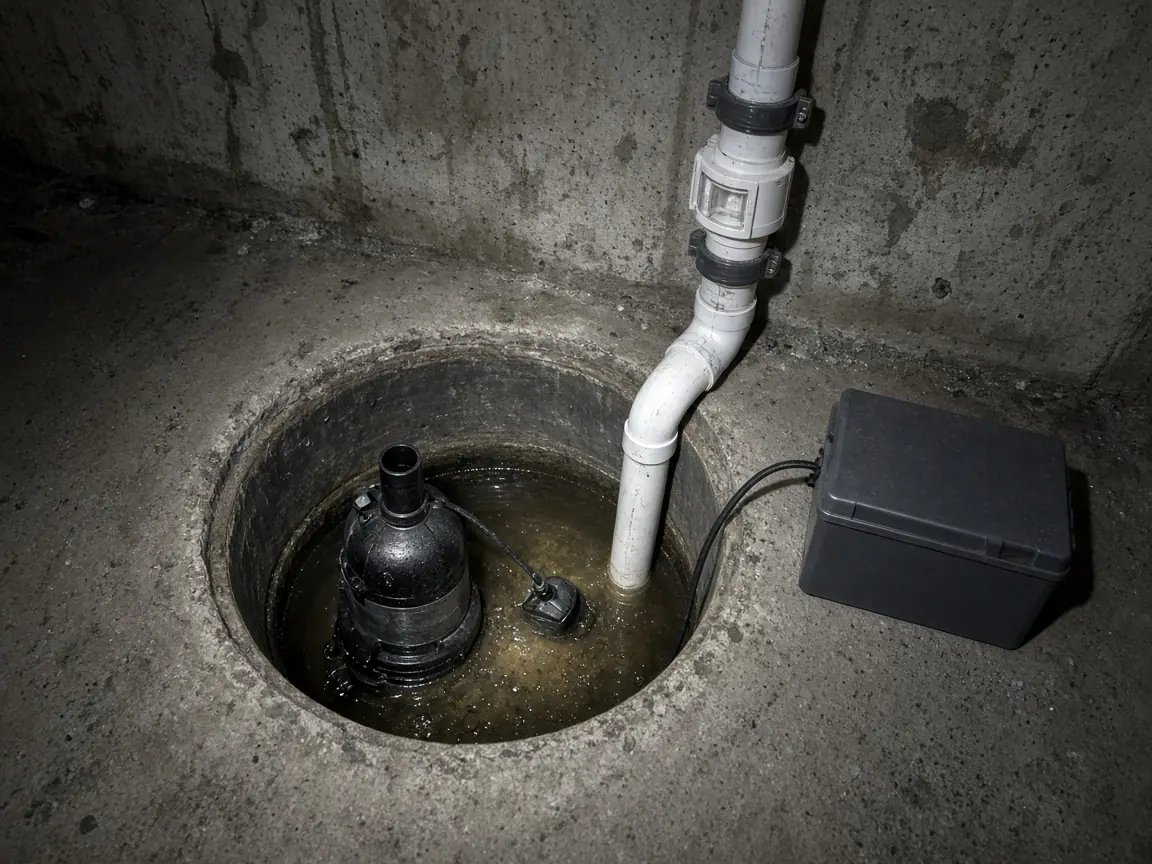
A sump pump sits in a pit and pumps out water collected by foundation drains. Test it by pouring water into the pit. Common failures are stuck float switches, burned-out motors, failed check valves and frozen discharge lines. A battery backup helps during storms that knock out power. See sump pump repair.
Grading and gutters
Soil should slope away from the foundation. Downspouts should discharge several feet from the house. Clogged gutters dump water right at the foundation. Window wells need drains and covers.
Swelling soils
Parts of the Front Range have clay soils that swell when wet and shrink when dry. Water against the foundation can make them heave. The Colorado Geological Survey on swelling soils explains the hazard. Keeping water away from the foundation helps.
Finished basements
Finished basements raise the stakes. Carpet, drywall and furniture soak up water quickly, and mold can follow within days. Consider a high-water alarm in the sump pit, a battery backup pump and a backwater valve on the sewer line, and keep stored items off the floor in plastic bins rather than cardboard.
Weather
The National Weather Service Boulder office posts storm and flood watches. Spring is the season to test pumps and clean gutters.
Plumbing leaks
Sometimes the water is from a burst pipe, a water heater or a supply line. Check those, and know where your main shutoff is.
Insurance
Flood and groundwater damage are often excluded from standard policies, and sewer backup often requires an endorsement. Review your policy.
Related
See sewer backup and burst pipe repair.
Keep this handy
The plumbing emergency checklist puts the first steps for burst pipes, sewer backups, gas smells, leaking water heaters and frozen pipes on one printable page. Tape it next to the main water shutoff, and make sure everyone in the house knows where that valve is and how to close it.
Want to talk it through?
Call the number on this page and explain what you're seeing, what kind of house it is and what you've already tried or shut off. Give your address or nearest cross streets and ask whether you're covered. You'll get an answer on the call, and you can ask how pricing works and whether a permit applies before anything is scheduled.
When to call instead of waiting
Call if water won't stop, if sewage is backing up, if the problem keeps returning, or if the fix means opening gas, venting, electrical or buried lines. If you smell gas, leave first and call Xcel Energy or 911 from outside. For everything else, have your address and a short description of the problem ready.
Denver and suburban notes
Denver permits come from the City and County of Denver, while Aurora, Lakewood, Arvada and the other suburbs run their own building departments, and Highlands Ranch goes through Douglas County. Water and sewer service comes from Denver Water, city utilities or special districts, depending on the address. Each location page links the official sites.
Sources checked
Reviewed November 13, 2026. Confirm anything important with the agency, since rules and programs change.